Reviewed by Arisa Tanaphon, Certified Tai Chi Instructor, Mindful Movement Specialist
Chair Tai Chi upper-body practice includes circles, openings, reaches, and pulls. Start by choosing the arm path you want to learn, then check the height and amount of holding it requires. Being seated removes the standing footwork task, but does not make every shoulder movement effortless.
The examples below are actual chair-track movements in Tai Chi for Seniors & Beginners. Each link opens the original video and steps, with extra cues and a smaller-range option. This is a selection of movements to inspect, not a new six-exercise program inside the app.
Key takeaways
- Chair Tai Chi upper-body practice can focus on a small arm path, relaxed shoulders, and a steady seated position. Lower the reach when overhead movement is uncomfortable.
- In Tai Chi for Seniors & Beginners, Upward And Forward Press reaches forward, returns, then reaches upward; Seated Arm Circles follows a circular path.
- Seated Sunrise Flow has 16 movements and 8 minutes of movement, about 12 minutes with preparation before extra pauses. Preview it because the full session also includes leg movements.
- Use the app’s pause and adjustable rest to check the return phase. A chair removes standing footwork but does not remove every demand on shoulders, wrists, or the trunk.
Set the chair so your arms have room
Use a stable chair without wheels and leave space beside and in front of it. Armrests can block a side sweep or an elbow moving backward. Choose a setup that lets you move without striking furniture or shifting the chair.
The NHS sitting-exercise guide recommends a solid chair and supported feet. Check that the feet can rest comfortably before adding the arm pattern. You should not have to balance on the edge of an unstable seat to copy the demonstration.
Six arm patterns to compare
| Movement | What makes the task different |
|---|---|
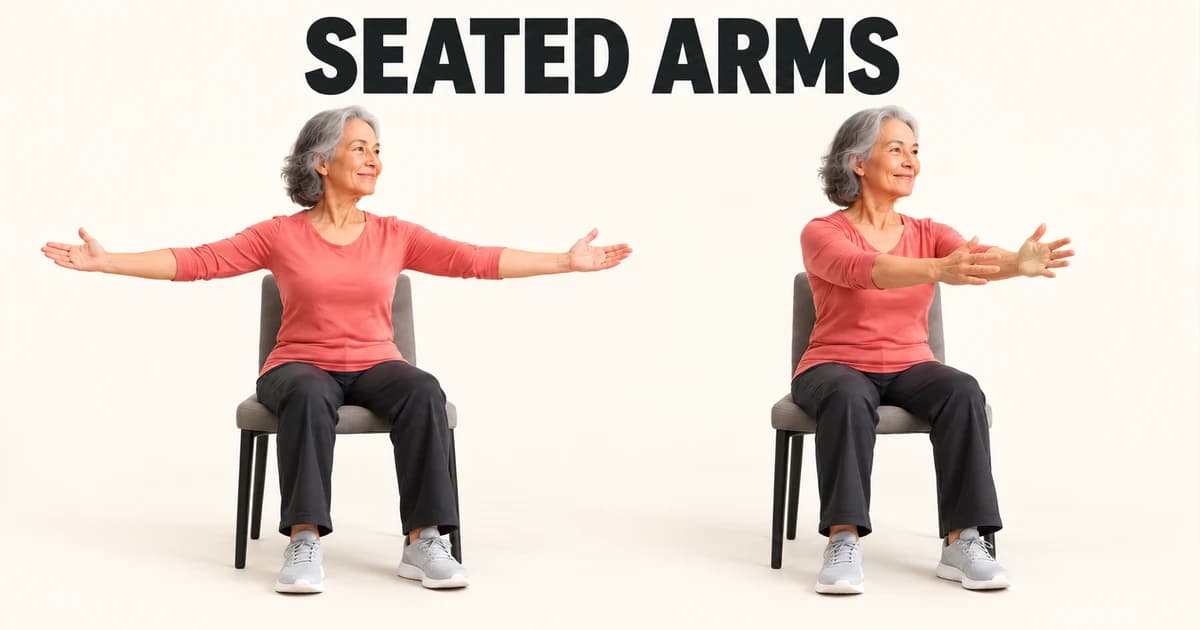
| Seated Arm Circles | The arms stay out while tracing small circles. Lowering the arm height changes the holding demand. |
| Seated Elbow Squeeze | The elbows draw back from a raised position, then return. Keep the squeeze gentle. |
| Seated Chest Embrace | The hands open from in front of the hips into a wider arm position. |
| Arm Reach Pull | The arms reach forward and the elbows draw toward the chest. No band or weight is required. |
| Upward And Forward Press | Joined hands change between a forward press and an upward reach, returning to center between directions. |
| Shoulder Rolls | The fingers rest on the shoulders as they circle; change direction after two rolls. |
Watch the elbow draw and reach-and-pull patterns
Seated Elbow Squeeze
- Lift your elbows to shoulder height and gently draw them back, squeezing the shoulder blades together before returning to the start.
- You should feel the muscles across your upper back waking up while keeping your shoulders relaxed.
Arm Reach Pull
- Reach both arms forward, then pull your elbows back as if drawing something toward your chest.
- Feel the muscles between your shoulder blades engage as you open through the front of your body.
Adjust the height before adding more repetitions
When holding the arms out becomes tiring, try a lower position first. A smaller circle can still let you practice an even path. In an elbow squeeze, stop the elbows sooner rather than pushing the chest forward to make the squeeze look larger.
An overhead press adds a different reach. You can rehearse the forward direction alone, or raise the hands only partway. Keep joined fingers light in Upward And Forward Press; do not force the wrist angle by pulling the hands tightly together.
Pay attention to the return phase
- In Arm Reach Pull, bring the hands forward again without rocking the torso.
- In Seated Elbow Squeeze, control the return rather than dropping the elbows.
- In Seated Arm Circles, slow the awkward part of the circle instead of skipping through it.
- Pause when the shoulders rise toward the ears, then restart with a lower arm path.
Stop movements that cause pain. The library describes the movement task and does not assess a shoulder injury or prescribe a rehabilitation sequence.
Where these movements appear in the app
Seated Sunrise Flow contains 16 movements, including the six examples in this guide. The full session also includes torso and leg work. Its timed movement blocks total 8 min, with an estimated total time of 12 min including preparation.
Open that complete sequence before choosing it. In the app, you can follow the real-trainer videos, pause, adjust rests, and save practice activity. For a daily sequence, preview the seated beginner plan. For lower-body patterns, continue with seated Tai Chi leg exercises.
Adjust the reach before adding repetitions
If joint discomfort affects your grip or arm height, keep the reach small and avoid forcing the endpoint. Our Tai Chi for arthritis guide separates general practice choices from evidence for specific programs. For chair placement and other supported options, read Tai Chi for seniors.
Updated: October 16, 2026