
Reviewed by Arisa Tanaphon, Certified Tai Chi Instructor, Mindful Movement Specialist
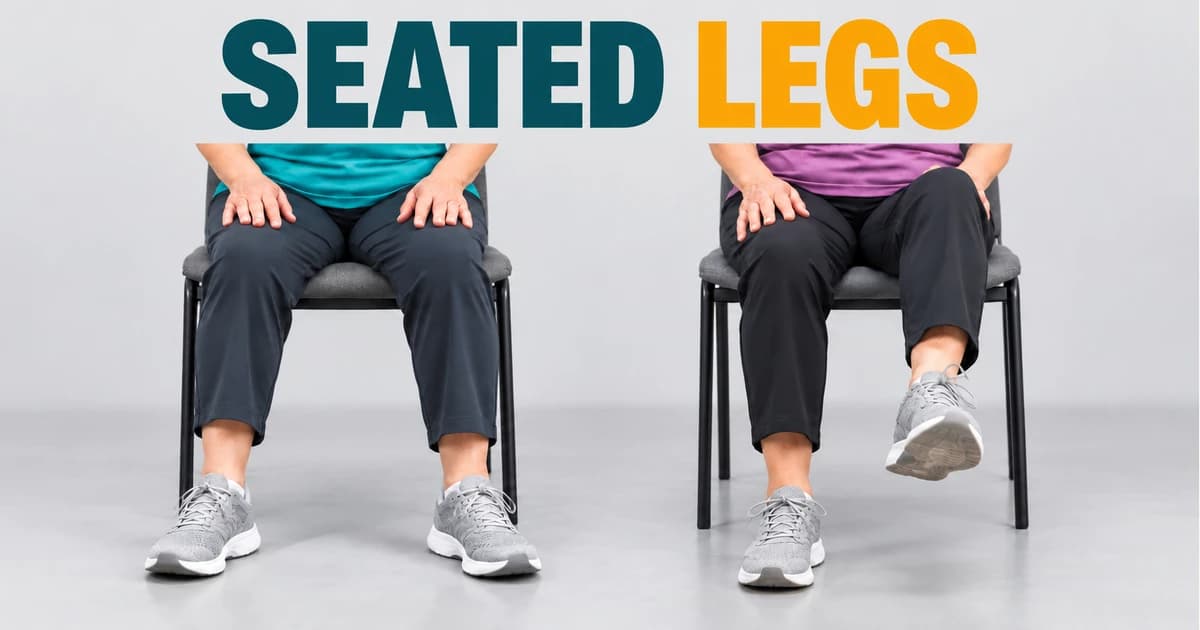
Seated leg movements differ in how much support the feet provide. Foot taps keep contact with the floor, a march lifts one foot at a time, and a straight-leg reach changes the knee position. Learn those differences before choosing a more complex arm-and-leg combination.
The five examples here come from the Chair Tai Chi track in Tai Chi for Seniors & Beginners. They are movement options to inspect, without a prescribed repetition count or a claim that one sequence treats a circulation, joint, or balance condition.
Key takeaways
- Chair leg exercises differ in support and coordination. Seated March alternates foot lifts; Seated Bicycle raises both feet while the hands hold the chair.
- Tai Chi for Seniors & Beginners offers Chair Legs: 14 movements, 7 minutes moving, about 10 minutes 30 seconds with preparation before extra pauses.
- Seated Palm Raise With Leg Lift pairs the same-side arm and knee. Seated Cross Body Knee To Elbow brings the opposite elbow toward the lifted knee with a torso turn.
- Preview each app demonstration before following its 30-second block. Keep the chair stable and reduce the lift or pause when the pattern pulls you off balance.
Keep the seat and starting foot position steady
Choose a firm chair without wheels on a surface where it will not slide. Set the screen where you can watch without repeatedly twisting the torso. Begin with feet supported, and move only through a range that lets you stay steady on the seat.
The NHS sitting-exercise guidance describes gradual practice with a stable chair and suggests checking suitability with a health professional when uncertain. Use individual advice if you have restrictions on leg lifting or bending.
Five leg patterns, from placement to lifting
| Movement guide | Task to notice |
|---|---|
| Foot Taps In And Out | The feet tap wider and return while the hands rest on the lap. Keep the placement light. |
| Ankle Circles Right | Keep the heels on the floor as the toes guide a rightward circle. |
| Ankle Circles Left | The feet explore the other circle direction. Use a small, fluid path rather than forcing the endpoint. |
| Straight Leg Reach | One leg extends with the toes flexing upward, then returns before the other leg moves. |
| Seated March | One knee lifts and lowers before the next. Add a relaxed arm swing only if the seated position stays steady. |
Compare an extension with an alternating march
Straight Leg Reach
- Stabilize your upper body by gripping the sides of the chair. Extend one leg straight out with your foot engaged and toes flexing up.
- Return with control before changing sides.
- Reach only as far as feels comfortable while keeping your chest lifted.
Seated March
- Bend your elbows and lift one knee, then the other, as if you're marching in place.
- Swing your arms naturally if it feels comfortable, helping build coordination while gently raising your heart rate.
Add arm coordination after the legs feel familiar
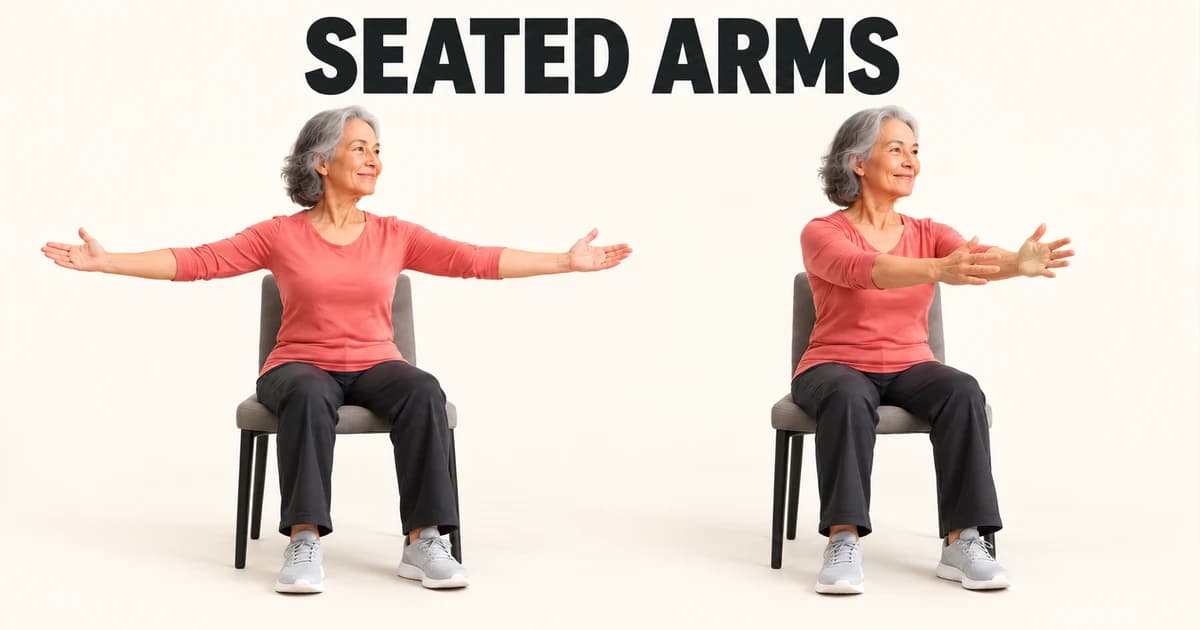
Seated Palm Raise With Leg Lift pairs an arm and knee on the same side. Seated Cross-Body Knee to Elbow uses an opposite elbow and knee with a turn. They are different patterns, so watch the pairing before trying to alternate.
Keep the knee low enough that the torso can remain steady. In Straight Leg Reach, a partial extension is a useful smaller version. You do not need to lift the whole leg high or straighten the knee to its furthest point to understand the pattern.
Check whether a movement lifts both feet
Chair exercises do not all leave a foot grounded. Seated Bicycle lifts both legs while the hands grip the chair. Seated Overhead Reach Crunch also includes a double-knee lift. These change the support demand compared with a simple seated march.
You can choose an alternating movement with a grounded foot when that is more manageable. For a broader comparison of support and stepping, read chair Tai Chi versus standing.
Choose support and range deliberately
A chair changes the support task, but knee lifts and extended-leg reaches still ask for different ranges. See Tai Chi for arthritis for the evidence and questions to discuss if joints limit practice. The Tai Chi for seniors guide covers other ways to adapt a first session.
Preview the complete Chair Legs session
The app’s Chair Legs session has 14 movements, including the five patterns above and other torso and arm-and-leg combinations. It contains 7 min of timed movement blocks; the estimated total time is 10 min 30 sec with preparation.
That full exercise order is available on the workout page. Inside the app, use the video guidance, pauses, and rest controls while your practice activity is saved. The seated beginner 30-day plan offers a separate daily sequence with short and extended choices.
Updated: October 16, 2026