
Reviewed by Arisa Tanaphon, Certified Tai Chi Instructor, Mindful Movement Specialist
Tai chi is often recommended as a low-impact, joint-friendly exercise for people who want to stay active without high mechanical stress. According to the NCCIH tai chi overview, tai chi may help with pain, stiffness, balance, and physical function in people with osteoarthritis. That is one reason it appears in mainstream guidance, not just alternative-health discussions.
The strongest practical signal comes from the 2019 American College of Rheumatology/Arthritis Foundation guideline, which strongly recommends tai chi for knee and hip osteoarthritis. The American College of Rheumatology guideline page and the Arthritis Foundation summary both frame exercise and tai chi as first-line non-drug options for many people with osteoarthritis.
That does not mean tai chi is a cure, and it does not mean all arthritis types respond the same way. For example, the evidence for rheumatoid arthritis is much weaker than for osteoarthritis.
Key takeaways
- Tai Chi evidence is stronger for knee and hip osteoarthritis than for rheumatoid arthritis. The NCCIH summary explains the limits; the app is not an arthritis treatment plan.
- Tai Chi for Seniors & Beginners has separate chair and standing tracks across 5 levels. An app level describes the routine, not what is medically suitable for a joint.
- Use Seated Arm Circles with a smaller shoulder range, or preview Sunrise Flow with planted feet. Avoid copying a painful reach or deep knee bend.
- The app’s movement blocks last 30 seconds, with pause and adjustable rest. Stop movements that cause pain rather than trying to finish the block.
Why tai chi may work well for arthritis
Tai chi is different from many fitness routines because it combines slow movement, posture control, weight shifting, breath awareness, and attention regulation. The Harvard Health overview describes tai chi as circular, unforced movement that can be adapted to many ability levels, which is one reason it is attractive for people who want movement without heavy joint loading.
For arthritis, that combination matters. People are not only dealing with pain; they often also struggle with stiffness, fear of movement, balance decline, and reduced confidence. Tai chi can address several of those at once:
- gentle range-of-motion work,
- repeated weight transfer,
- lower-body control,
- postural awareness,
- calmer pacing that makes consistency easier.
That broader “movement confidence” effect is one reason tai chi tends to be discussed alongside fall prevention strategies for older adults and not just pain relief.
What the research says about osteoarthritis
The clearest evidence is for osteoarthritis, especially the knee. The NCCIH fact sheet notes that a review of osteoarthritis studies found improvements in pain and stiffness, and the 2019 ACR/AF guideline strongly recommends tai chi for knee and hip OA.
More detailed reviews strengthen that picture: A 2021 systematic review and meta-analysis found low-to-moderate strength evidence that tai chi helped with pain, stiffness, physical function, balance, and psychological health in knee osteoarthritis. Another 2021 review focused on walking function and posture control also found positive effects in older adults with knee OA. The AAFP summary of the OA guideline puts tai chi in the same first-line conversation as exercise and self-management.
BMI Calculator (Adults 18+)
Calculate your body mass index and check your weight category.
Formula: BMI = weight(kg) / height(m)²
This calculator is for adults aged 18+ and is for guidance only.
For adults, BMI uses the same formula for female and male users.
Do not use this tool if you are pregnant, under 18, have (or may have) an eating disorder, or have a condition that affects height.
What about rheumatoid arthritis?
This is where many articles become sloppy. Tai chi is often discussed as if “arthritis” were one condition, but that is not accurate.
The Cochrane review on tai chi for rheumatoid arthritis found uncertainty about whether tai chi reduces pain or disease activity in RA. The NCCIH summary makes a similar point: tai chi has not been shown to change disease activity in rheumatoid arthritis, though there may be some improvement in movement quality.
Why tai chi can feel joint-friendly
A well-taught tai chi session gives you control over:
- tempo
- stance depth
- range of motion
- session length
- rest breaks
- whether you practice standing or seated
That level of control is exactly why many people with arthritis tolerate tai chi better than more abrupt exercise formats. It also fits CDC’s page on physical activity and arthritis, which lists tai chi among joint-friendly activities that put little or no stress on the joints.
What is Tai Chi for Arthritis?
Tai Chi for Arthritis is a structured program associated with Dr. Paul Lam and the Tai Chi for Health Institute. It is often referenced in public-health and arthritis-management contexts because it was built to be accessible, gentle, and easier to teach consistently. CDC also has a resource discussing the Healthy Living with Arthritis: Tai Chi for Arthritis Program.
Is tai chi safe for people with arthritis?
Generally, tai chi is considered a safe practice when it is scaled to the individual. The NCCIH provider summary for older adults notes that tai chi is considered safe, and the meta-analysis on adverse events found that serious harms linked to tai chi were uncommon.
That said, “safe” does not mean “do any movement no matter what.” A few practical rules matter:
- Use a comfortable range of motion and stop movements that cause pain.
- Reduce depth, speed, and repetition during flares.
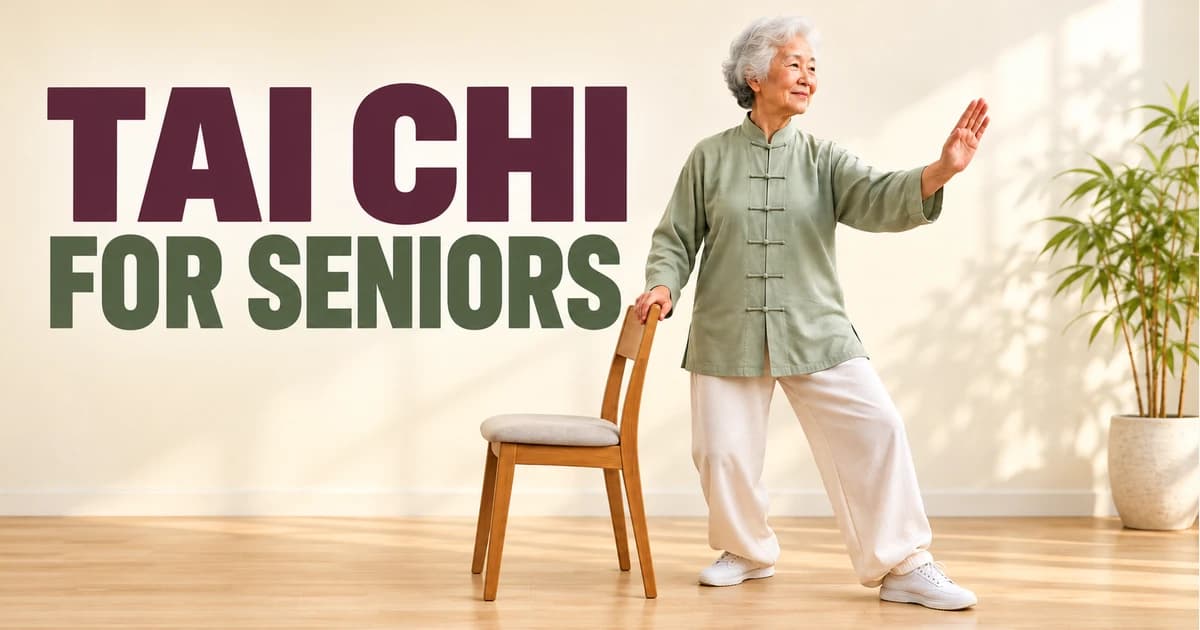
- Use a chair or wall for support if balance is uncertain.
- Choose instruction that emphasizes gentle form, not performance.
How to start tai chi for arthritis
For most beginners, the best plan is boring and sustainable:
- Start with 10 to 15 minutes.
- Practice 2 to 4 times per week.
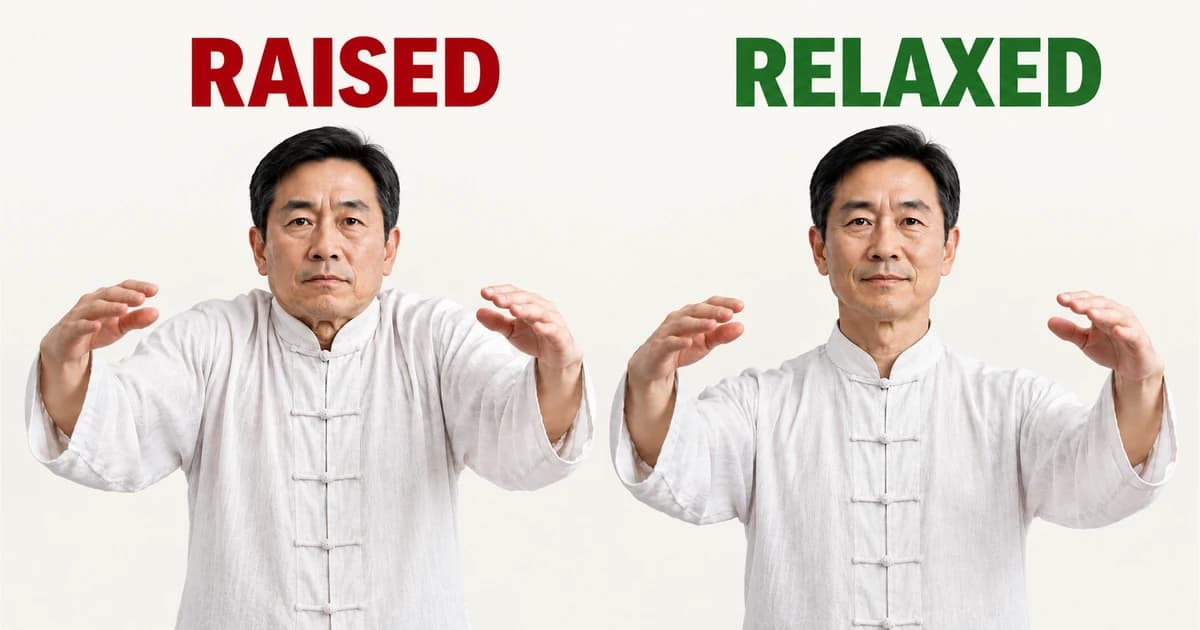
- Focus on upright posture, slow weight shifts, and easy breathing.
- Avoid deep knee bends and aggressive twisting at first.
- Progress only when the current routine feels easy.
A simple beginner session might include: opening posture, arm raises, weight shifts, gentle cloud-hands style movement, slow closing posture.
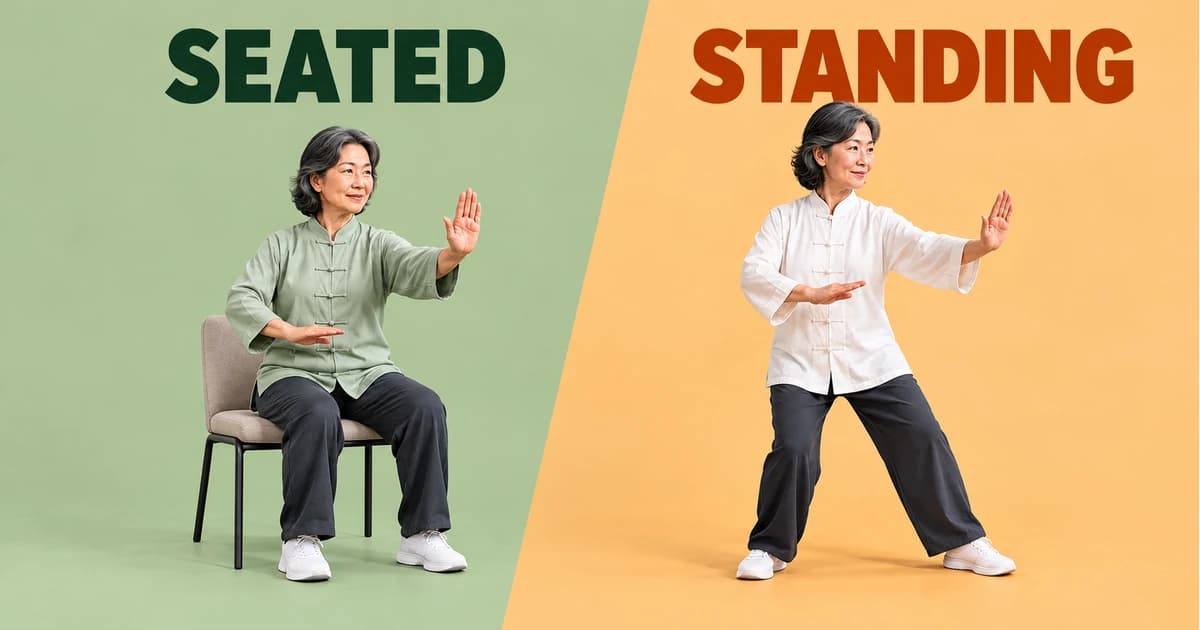
If standing is uncomfortable, modified or chair-based forms are often a better entry point than trying to force full standing practice on day one.
Standing vs seated tai chi for arthritis
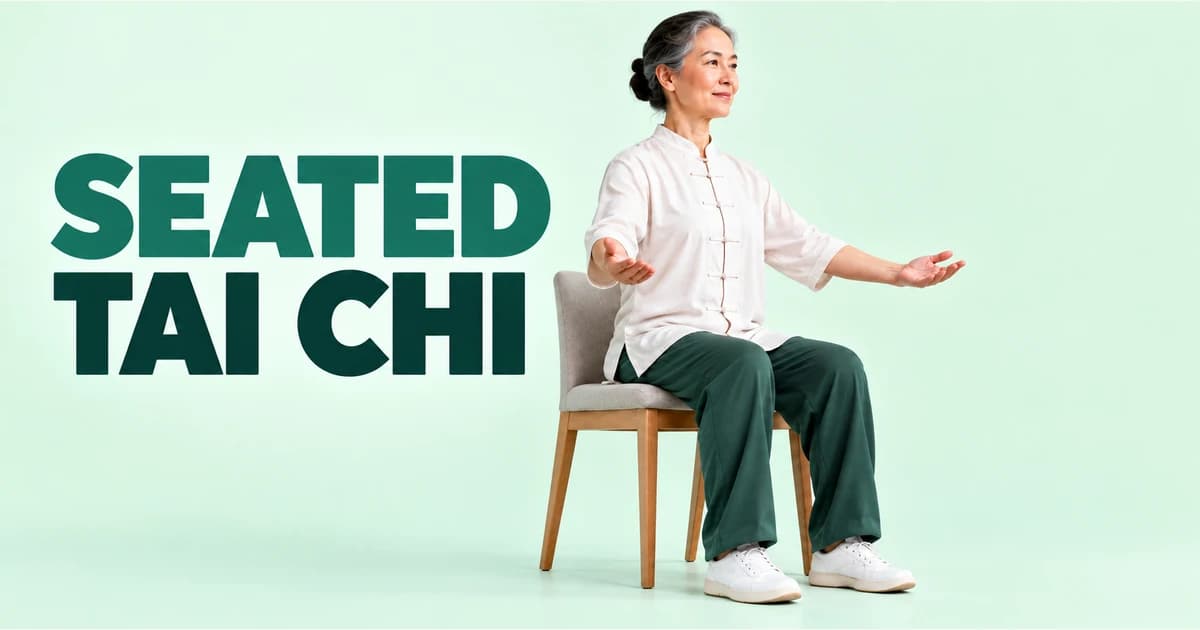
Standing tai chi can help with balance and weight shift, but seated tai chi is often useful for people with severe knee pain, fatigue, foot pain, or fear of falling. It is not cheating. It is smart progression.
Explore the movements in our app
To inspect what a movement asks of your joints, open Arm Circles or Seated Arm Circles. Compare arm height and the amount of movement before following along. Foot Taps In And Out shows a different seated pattern with the hands resting on the lap. These are movement examples, not arthritis-specific prescriptions.
Our app offers seated and standing tracks, adjustable rest, and pauses during a session. You can preview Seated Sunrise Flow to identify movements to discuss with your clinician or instructor. Use a comfortable range and stop movements that cause pain; the library’s difficulty label does not assess a particular joint condition.
FAQ
It may help, especially for knee and hip osteoarthritis. The best support comes from the ACR/AF guideline and the NCCIH evidence summary.
No. Tai chi is best understood as a management tool, not a cure. It may improve pain, stiffness, movement confidence, and balance, but it does not “reverse” arthritis.
Not universally. Walking is excellent too. Tai chi may be more appealing for some people because it adds balance, coordination, posture, and controlled movement in one routine.
Poorly taught or overly aggressive movement can aggravate symptoms, which is why modifications matter.
Yes. It is a structured, widely recognized program associated with Dr. Paul Lam and the Tai Chi for Health Institute.
References
- Tai Chi: What You Need To Know — NCCIH
- 2019 American College of Rheumatology/Arthritis Foundation Guideline for the Management of Osteoarthritis of the Hand, Hip, and Knee
- Tai chi exercise can ameliorate physical and mental health of patients with knee osteoarthritis: systematic review and meta-analysis
- Effects of tai chi exercise on improving walking function and posture control in elderly patients with knee osteoarthritis: a systematic review and meta-analysis
- Tai chi for rheumatoid arthritis — Cochrane review
Updated: October 16, 2026