
Reviewed by Arisa Tanaphon, Certified Tai Chi Instructor, Mindful Movement Specialist
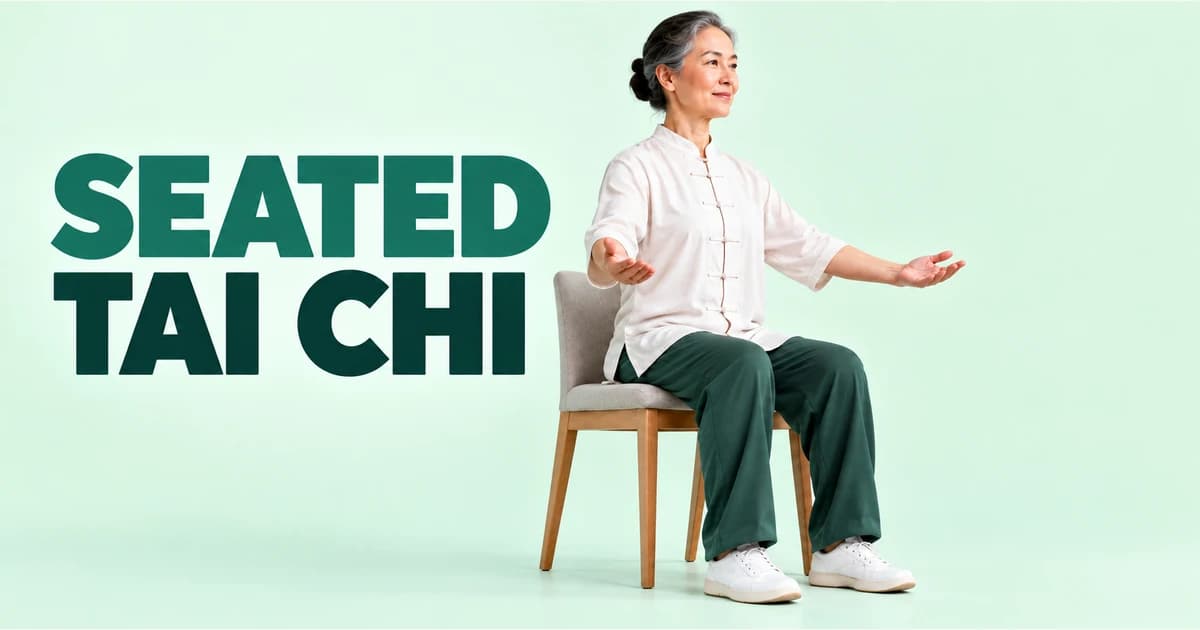
Seated tai chi is not a backup plan for people who “cannot do the real thing.” It is a real practice in its own right. Chair-based tai chi keeps the core principles of tai chi — posture, breathing, coordinated movement, and calm attention — while reducing the demands of standing balance. That makes it useful for beginners with mobility limits, people recovering from illness, and older adults who want a safer entry point.
NCCIH’s tai chi health tips explicitly notes that tai chi movements can be adapted and practiced while walking, standing, or sitting. That one sentence matters more than many people realize.
Key takeaways
- Seated Tai Chi practices posture, arm coordination, and breathing from a stable chair. Foot support and a comfortable reaching range still matter.
- In Tai Chi for Seniors & Beginners, Seated Sunrise Flow contains 16 movements: 8 minutes moving, about 12 minutes with preparation before extra pauses.
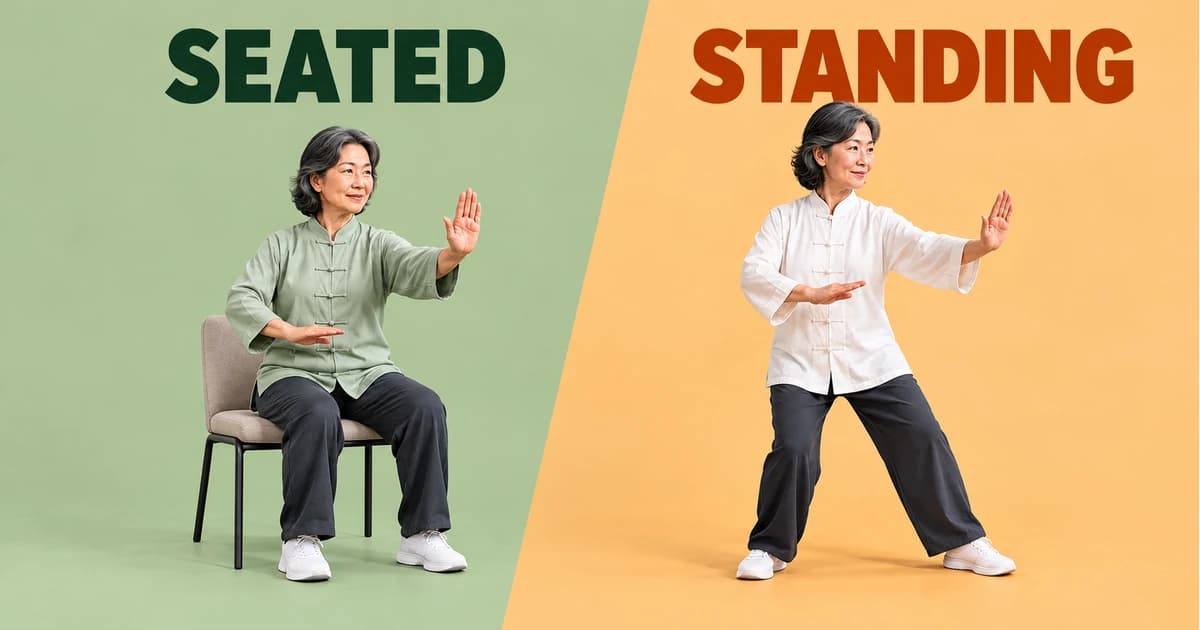
- The chair track has its own videos, plans, and saved progress. Upward And Forward Press reaches forward and upward; it is not simply the standing Sunrise Flow performed sitting down.
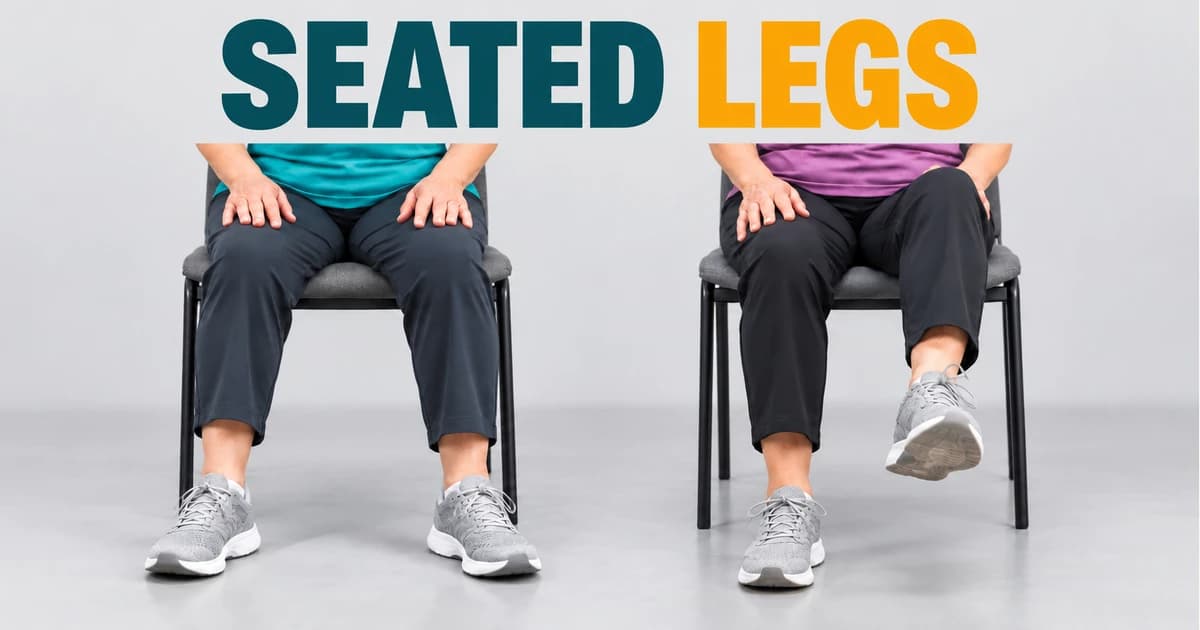
- Begin leg work with Seated March’s alternating foot lifts. Seated Bicycle lifts both feet and asks you to hold the chair, so preview it before treating all chair movements alike.
Who seated tai chi is especially useful for
Seated tai chi is often a good fit for:
- older adults with poor standing balance
- beginners with a strong fear of falling
- people recovering after illness or stroke
- wheelchair users
- anyone who wants a low-pressure, accessible starting point
That broader adaptive logic is reflected in programs like the Wheelchair/Adaptive Tai Chi Chuan Program at UTC and the work of Adaptive Tai Chi International.
BMI Calculator (Adults 18+)
Calculate your body mass index and check your weight category.
Formula: BMI = weight(kg) / height(m)²
This calculator is for adults aged 18+ and is for guidance only.
For adults, BMI uses the same formula for female and male users.
Do not use this tool if you are pregnant, under 18, have (or may have) an eating disorder, or have a condition that affects height.
What the research says about seated tai chi
The seated tai chi evidence base is smaller than the standing tai chi literature, but it is not empty. A 2015 pilot study on sitting Tai Chi and balance control in older adults found improvements in sitting balance and pointing accuracy after training. The American Heart Association summary on seated tai chi after stroke also highlights why chair-based formats deserve more attention in rehab and older-adult settings.
Add to that the general safety meta-analysis and the broader tai chi balance-and-falls overview, and you get a reasonable conclusion: seated tai chi may be a practical, lower-barrier entry point for people who need more support.
How to set up for seated tai chi at home
Use a chair that:
- does not roll
- does not swivel
- has a stable seat height
- allows your feet to rest securely
Sit tall but not rigid. Relax the shoulders. Keep the chin level. If possible, sit toward the front half of the chair so the spine can stay upright instead of collapsing into the backrest.
A simple 8-minute seated tai chi routine
Try this sequence:
- 1 minute: quiet seated posture and natural breathing
- 1 minute: slow arm raises and lowers
- 1 minute: opening and closing through the hands and chest
- 1 minute: small left-right torso turns
- 2 minutes: simplified seated cloud hands
- 1 minute: gentle circling arms
- 1 minute: palms down to close the session
If fatigue is an issue, start with 5 minutes. Success is better than ambition.
What seated tai chi still teaches
Chair-based practice can still train:
- awareness of posture
- relaxed shoulders and neck
- movement from the center instead of only from the hands
- coordinated breathing
- smooth transitions
- calm, repeatable movement habits
That is why seated practice is not a “lesser” version. In some cases it is the best version.
When to stay seated and when to progress
Stay with seated tai chi if:
- you feel unsafe standing
- you fatigue quickly
- you are in recovery
- standing causes pain or instability
Progress to supported standing if:
- transfers feel steady
- posture is easier to maintain
- you want to train weight shifting more directly
- your clinician or therapist thinks it is reasonable
- The progression should be gradual, not forced.
Explore the movements in our app
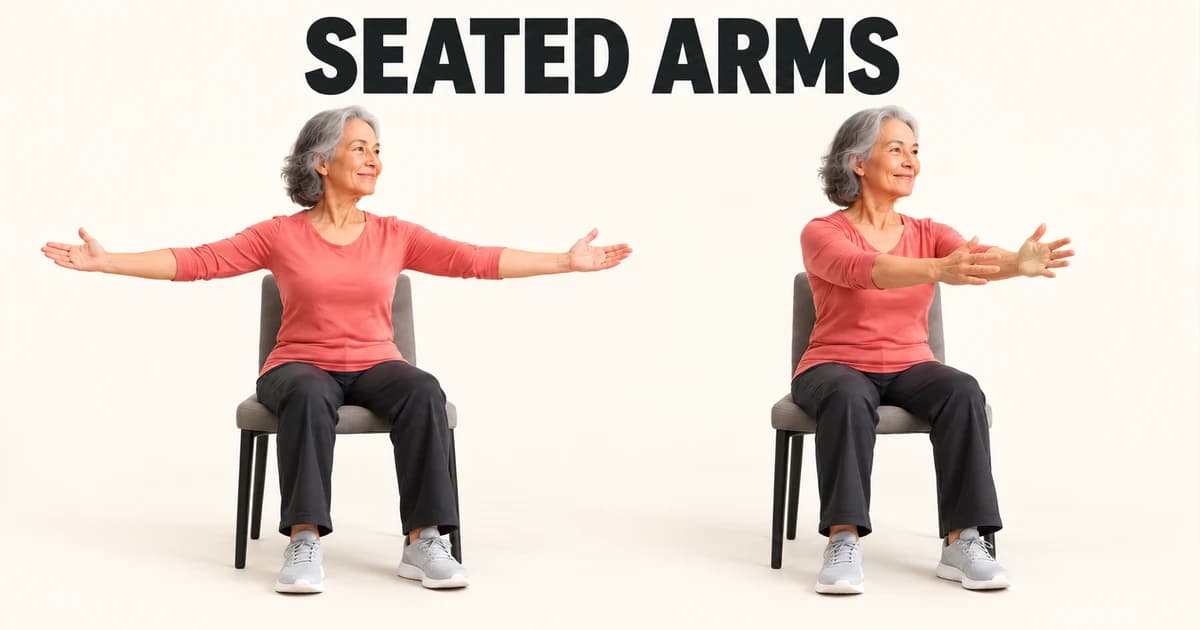
Try the chair track’s real movement patterns: Seated Arm Circles for a slow arm path, Seated Torso Twist for a small turn, and Foot Taps In And Out for light foot placement. Use a stable chair without wheels and adjust the movement range to what feels comfortable. For more focused choices, compare our chair arm patterns and seated leg exercises.
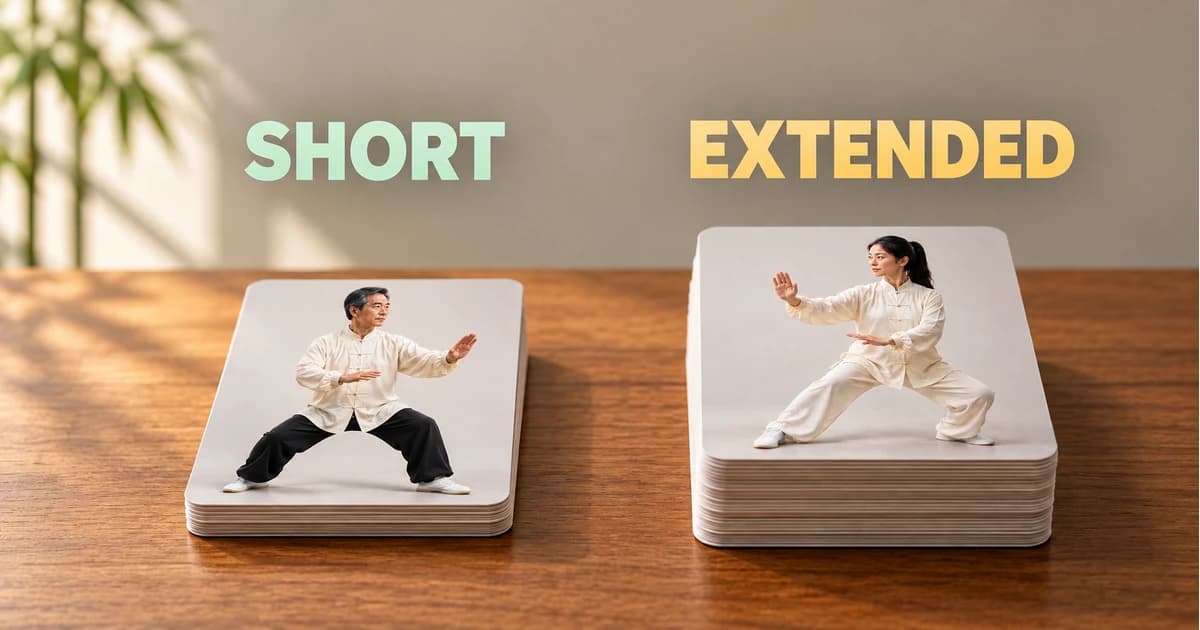
The Seated Sunrise Flow page shows a complete app session in its original order. The seated beginner 30-day plan previews the first week in both short and extended versions. In Tai Chi for Seniors & Beginners, select Chair Tai Chi during setup or change the workout type in plan settings; its completed days are saved separately from standing practice.
Watch the app demonstrations
Seated Arm Circles
- Extend both arms out to the sides and make slow, controlled circles.
- Notice how a slower speed requires more strength and control.
- Find a pace that works for you.
Foot Taps In And Out
- Place your palms on your lap and tap your feet out wide, then bring them back together in a comfortable rhythm.
- Keep the movement light and relaxed to wake up the legs and improve coordination.
FAQ
Yes. It preserves core tai chi principles such as posture, flow, breathing, and coordinated movement.
Yes. It is often one of the safest entry points for seniors with balance concerns or fatigue.
Yes. Adaptive tai chi programs exist specifically for wheelchair users and others with ambulatory limitations.
Five to ten minutes is enough for beginners. You can build from there.
References
- Lee KYT, Tsang WWN, Ng SSM. The effects of practicing sitting Tai Chi on balance control in older adults. https://pubmed.ncbi.nlm.nih.gov/25060039/
- American Heart Association. Seated form of tai chi might boost stroke recovery. https://www.heart.org/en/news/2022/04/07/seated-form-of-tai-chi-might-boost-stroke-recovery
- UTC. Wheelchair/Adaptive Tai Chi Chuan Program. https://www.utc.edu/arts-and-sciences/social-cultural-and-justice-studies/anthropology/wheelchair-tai-chi-chuan-program
- Adaptive Tai Chi International. https://adaptivetaichi.org/
- Cui H, Wang Q, Pedersen M, et al. The safety of tai chi: a meta-analysis of adverse events in randomized controlled trials. https://pubmed.ncbi.nlm.nih.gov/31229620/
Updated: October 16, 2026