
Reviewed by Arisa Tanaphon, Certified Tai Chi Instructor, Mindful Movement Specialist
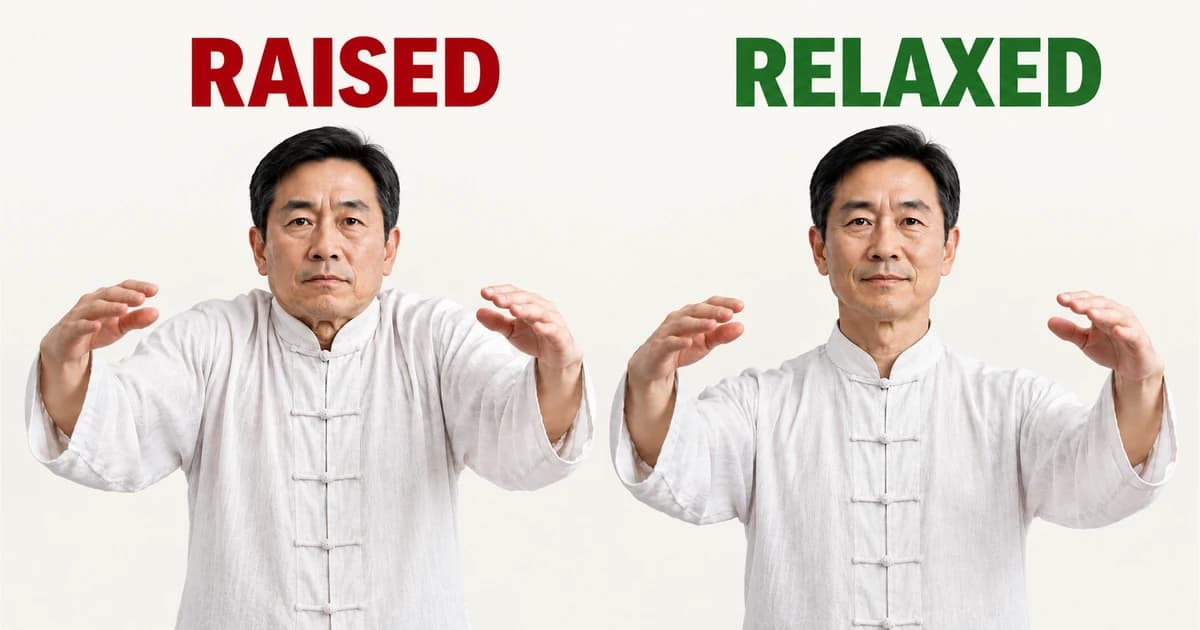
Common beginner Tai Chi mistakes are usually small: shoulders creep up, a weight shift becomes a lean, or the next movement starts before the previous one finishes. Correct one detail at a time. The exercise demonstrations below give you concrete reference points to watch rather than a vague instruction to “relax more.”
Key takeaways
- Common beginner problems include raised shoulders, leaning during weight shifts, twisting through planted knees, and holding the breath while concentrating.
- Tai Chi for Seniors & Beginners uses 30-second movement blocks. Pause to check foot placement rather than rushing through a turn to finish with the timer.
- Compare Sunrise Flow, with planted feet, and Floating Cloud Hands, with turning and weight shifts. They require different checks, even when the arms look relaxed.
- The app separates rest settings, audio instructions, and music preferences. Adjust the cueing and recovery time when following both the video and spoken instructions feels busy.
1. Raising your shoulders along with your arms
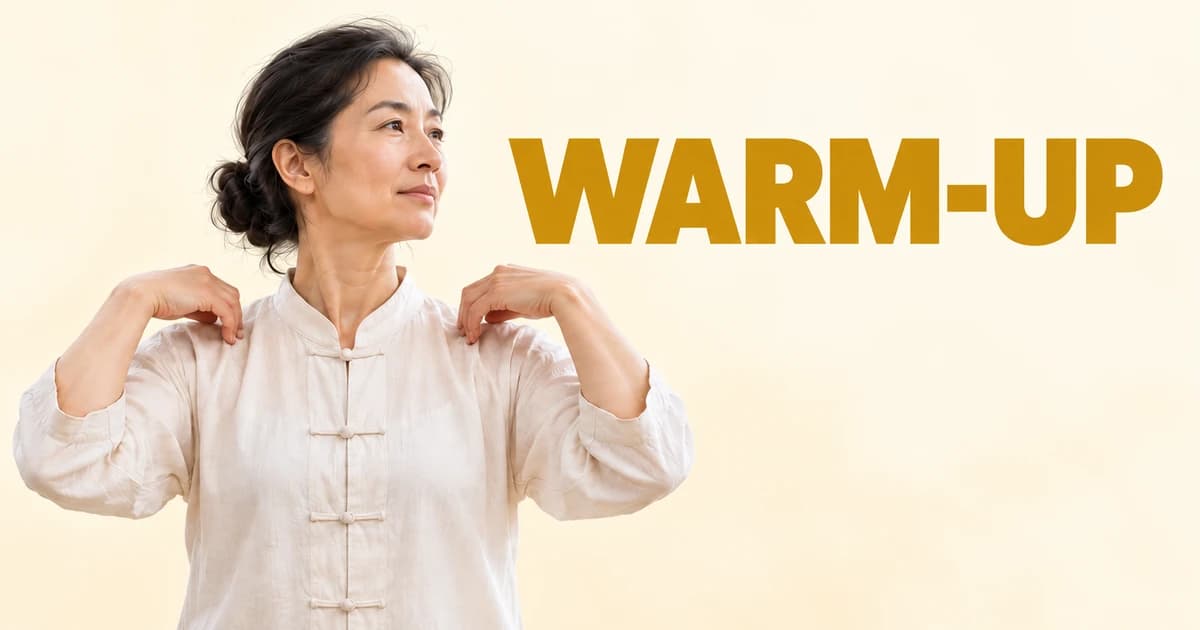
In Sunrise Flow, the hands rise and then lower. Your shoulders do not need to stay lifted near your ears. Watch whether they soften again as the arms come down. Start with a lower arm path if reaching overhead makes you arch your back.
For Arm Circles, make the circles smaller before trying to push through a tiring shoulder position. The app instructions call for controlled circles and relaxed shoulders, not the widest possible reach.
2. Moving your head sideways instead of transferring weight
During Side to Side Sway, notice the changing pressure beneath your feet. If only your head and shoulders travel sideways, the movement has become a lean. Reduce the distance, keep the torso upright, and take time to return through the center. Stay near stable support if needed.
3. Copying the deepest knee bend in the video
A demonstration shows an example range. Your starting range can be smaller. In Core Drive, the bend and the forward arm press happen together; you can rehearse that timing with a shallow bend. Stop if you feel pain. Deepening the bend is not required to understand the coordination.
4. Forcing the turn with your shoulders
In Floating Cloud Hands, a small torso turn accompanies the hands. Start with a short arc, let the weight shift happen gradually, and keep the knees comfortably aligned with the feet. Do not force the torso farther while the lower body feels stuck. Reset your stance if the movement becomes awkward.
Watch an opening and a closing movement
Sunrise Flow
- Stand tall with feet shoulder-width apart. Soften knees, arms relaxed by sides.
- Inhale and slowly sweep the arms overhead.
- Exhale, lower arms in front with control.
Grounded Closing Stand
- Stand with feet shoulder-width apart. Inhale and extend the arms in front of the body.
- Exhale, and slowly lower them back down.
- Let the arms rest by your sides and pause calmly.
5. Holding your breath to match a cue
Breathing cues help organize the movement; they should not make you strain. If you cannot comfortably finish the arm motion during one breath, shorten the motion or use your natural breathing rhythm. Let the exhale happen without squeezing the chest or throat.
For more on matching movement with an easy breath, read Tai Chi breathing for beginners. Practice Grounded Closing Stand on its own: extend the arms, lower them slowly, and pause. Use the pause to notice whether you have been holding tension in your hands or jaw.
6. Treating the timer as a repetition challenge
The app assigns 30 seconds to a movement. That is a practice block, not a demand to finish a certain number of cycles. Watch once before following along, pause when a transition is unclear, and adjust rest time in the workout controls. Rushing to fit more repetitions into a block defeats the purpose of practicing control.
7. Adding footwork before you understand the arm pattern
Learn a stationary movement before a sequence with cross steps, kicks, or knee lifts. Side Flow Step, for example, crosses one foot behind the other while the arms pull downward. Preview that whole pattern before choosing a workout that contains it. The basic movements guide gives simpler pieces to learn first.
A useful check for your next session
- Choose one familiar movement and one detail: shoulder height, a smooth return, or steady breathing.
- Watch that detail in the video, then rehearse it in a comfortable range.
- Stop, reset, and try again if the movement becomes rushed.
- Keep the same focus for the next practice before adding a new correction.
Tai Chi for Seniors & Beginners provides the same videos and step cues used in this library. The app can guide timing and save progress; a qualified instructor can give individual feedback that a prerecorded demonstration cannot.
Updated: October 16, 2026