Reviewed by Arisa Tanaphon, Certified Tai Chi Instructor, Mindful Movement Specialist
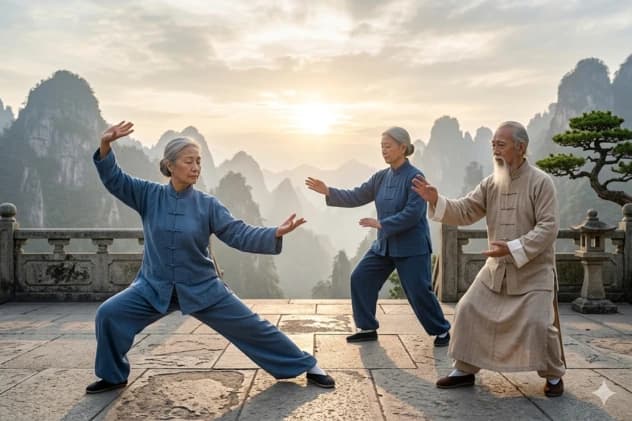
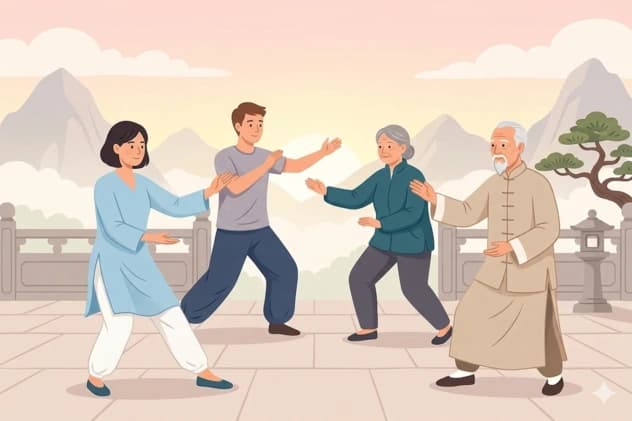
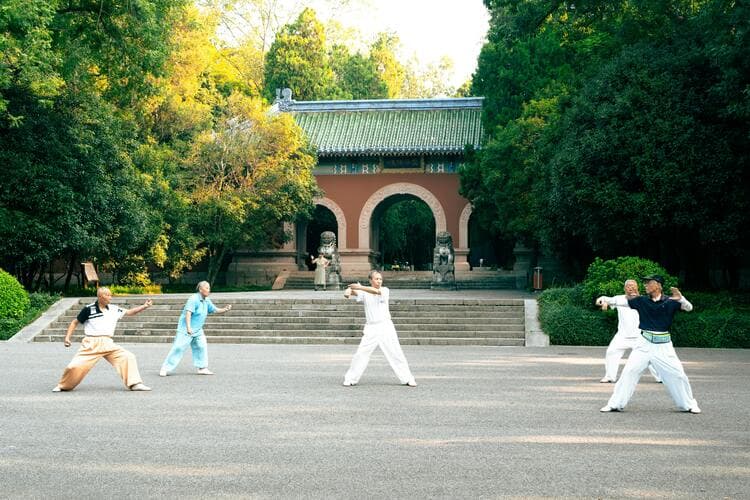
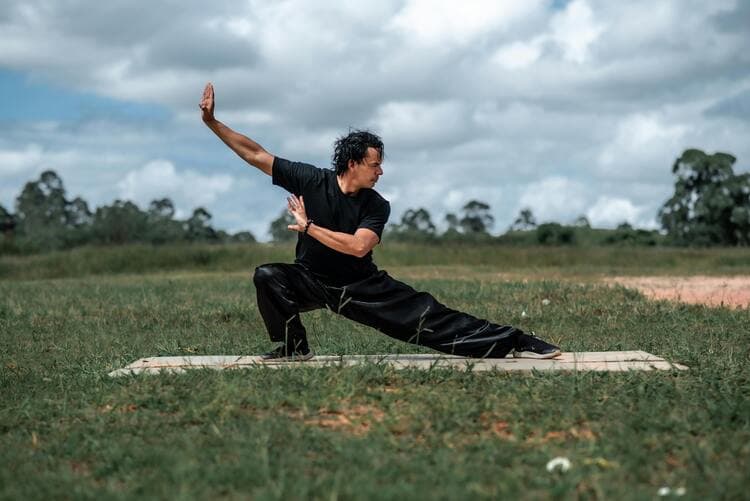
The easiest way to start tai chi is to learn a few repeatable movement patterns before trying a long formal sequence. That approach is more realistic for beginners, and it matches how many health-focused tai chi programs are taught. According to NCCIH, tai chi combines slow movement, postures, breathing, and mental focus. The older NCCIH tai chi and qi gong overview PDF also helps explain why tai chi movements are usually circular, controlled, and coordinated with attention.
If you want a simple rule, use this one: a movement “counts” as tai chi when it is organized, relaxed, and connected — not when it just looks fancy.
Key takeaways
- Beginners do better with a few repeatable patterns than with a long form.
- Basic tai chi movements train posture, weight transfer, coordination, and rhythm.
- Names vary by style and teacher, but the underlying movement qualities are similar.
- Slow movement is not “easy movement”; it reveals balance and control problems quickly.
- Short practice sessions are enough to build skill.
Before the movements: what beginners should understand
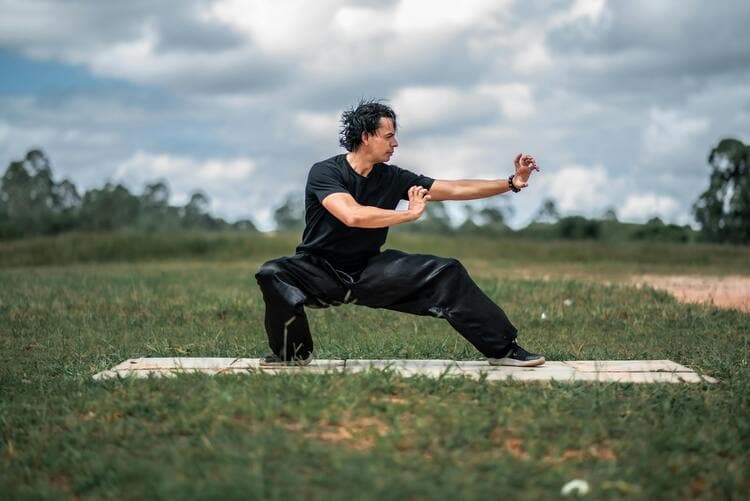
Tai chi movements are not random arm shapes. They are organized around posture, turning from the center, and keeping movement smooth. The Tai Chi for Health Institute overview explains this well: the outside looks soft and flowing, but the inside is about attention, alignment, and relaxation.
That is why basic movements matter. Research on balance and control — including an overview of systematic reviews on falls and balance and a recent meta-analysis on balance in older adults — supports the idea that controlled tai chi practice can improve how people organize their movement over time.
BMI Calculator (Adults 18+)
Calculate your body mass index and check your weight category.
Formula: BMI = weight(kg) / height(m)²
This calculator is for adults aged 18+ and is for guidance only.
For adults, BMI uses the same formula for female and male users.
Do not use this tool if you are pregnant, under 18, have (or may have) an eating disorder, or have a condition that affects height.
7 basic movements
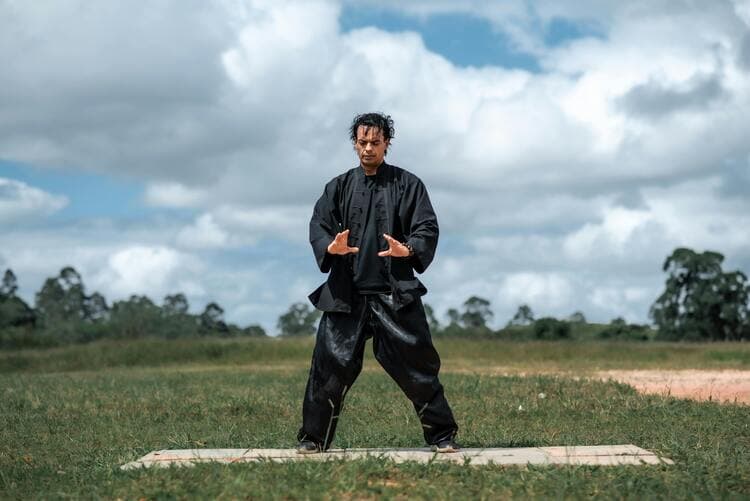
- 1) Commencing form. Stand with your feet about shoulder-width apart and let the arms rest naturally by your sides. Inhale gently as the arms float upward to a comfortable height. Exhale as the arms lower. Why it matters: teaches posture; teaches shoulder relaxation; introduces rhythm without complexity.
- 2) Broadening the chest. Raise the arms comfortably, then open them outward as if widening the front of the chest. Return to center without stiffening the elbows. Why it matters: opens the upper body; teaches expansion and return; helps beginners avoid rigid arm movement.
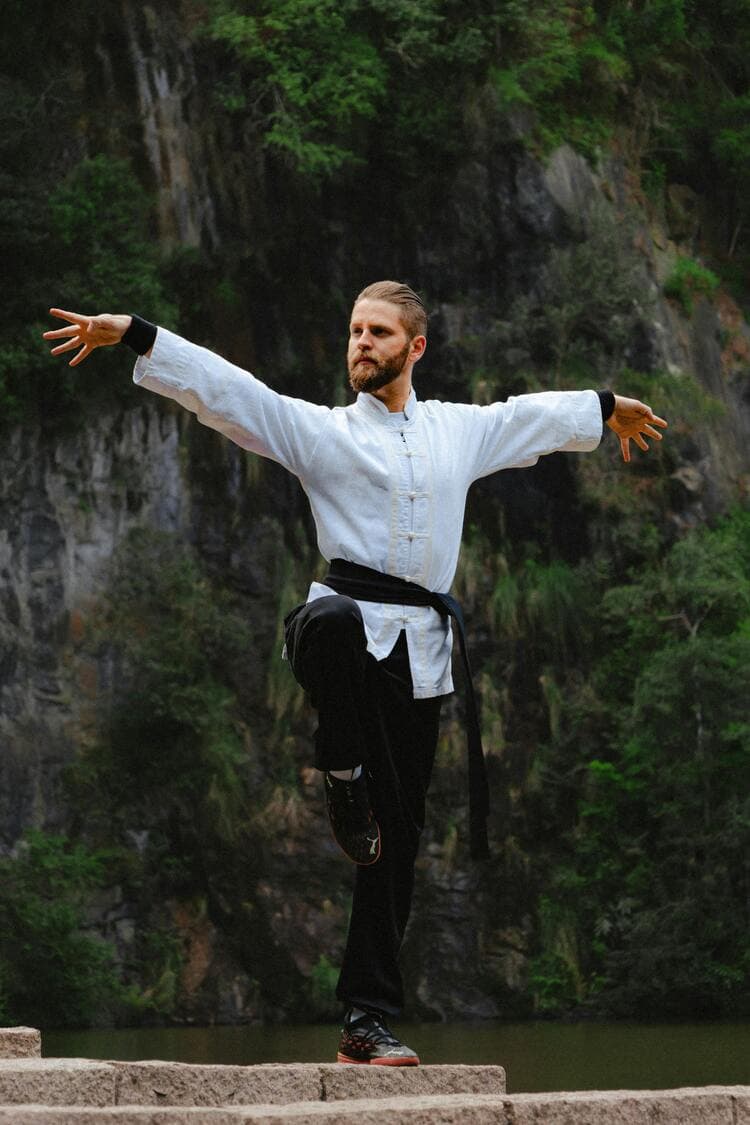
- 3) Dancing with rainbows. Shift weight gently to one side while one arm arcs overhead and the other extends outward. Return through center and repeat on the other side. Why it matters: teaches side-to-side transfer; adds torso coordination; introduces asymmetry without fast stepping.
- 4) Circling arms. Start with the hands softly crossed in front of the body. Lift them upward and then circle them outward and down. Why it matters: introduces circular pathways; reinforces relaxed elbows and wrists; connects the arms to the torso.
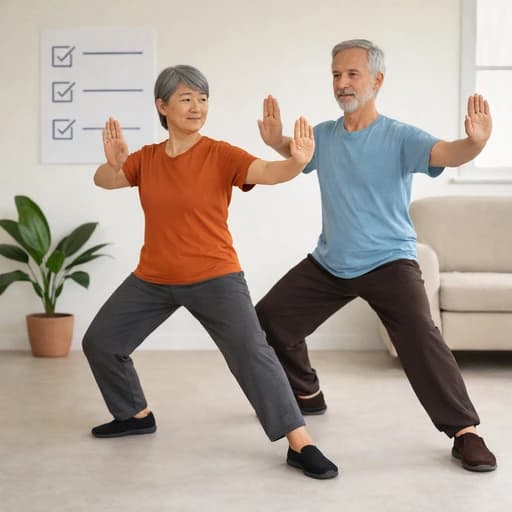
- 5) Cloud hands. Cloud hands is one of the most recognizable tai chi patterns. The hands move in alternating arcs while the torso turns and the weight shifts. If your balance is limited, you can begin with a stationary version before adding steps. This is a good example of how tai chi can be adapted, something also reflected in NCCIH’s health tips page. Why it matters: teaches coordinated turning; builds flow between left and right; is easy to scale from beginner to advanced.
- 6) Spreading your wings. Reach gently forward, then open the arms outward as you shift back. Keep the shoulders relaxed and avoid overreaching. Why it matters: connects reach and release; improves awareness of forward and backward shifting; helps beginners feel torso-led movement.
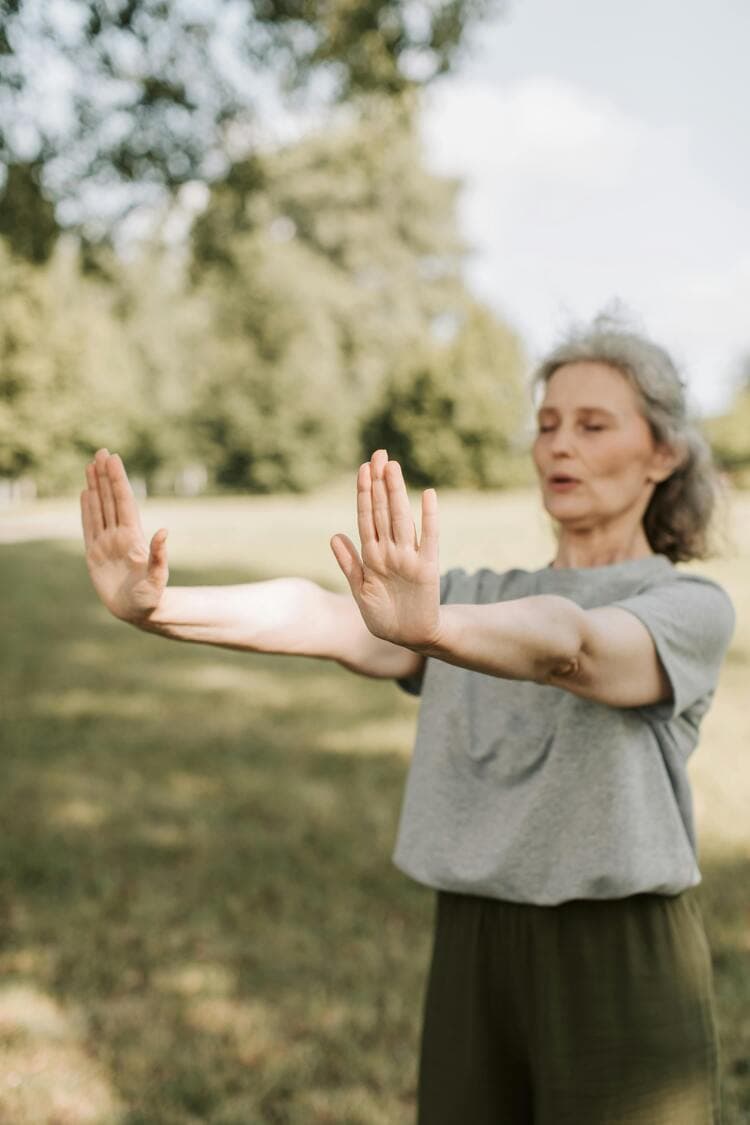
- 7) Pressing the palms / closing form. Bring the hands together, raise them to chest height, turn them gently downward, and lower them slowly to close the session. Why it matters: restores calm after movement; reinforces controlled tempo; gives a simple ending cue for short practice sessions.
How to practice these seven movements
- 1 minute settling your posture
- 3 to 5 repetitions of each movement
- slower tempo than feels natural
- short pauses if you lose control
- 1 quiet minute to finish
Common mistakes
- trying to memorize too many movements at once
- treating slow as casual and losing precision
- lifting the shoulders
- leaning instead of shifting weight
- doing large motions before you can do small ones well
FAQ
References
- NCCIH. Tai Chi: What You Need To Know. https://www.nccih.nih.gov/health/tai-chi-what-you-need-to-know
- NCCIH. Tai Chi and Qi Gong PDF. https://files.nccih.nih.gov/s3fs-public/Tai_Chi_and_Qi_Gong_09-11-2015.pdf
- Lee KYT, Tsang WWN, Ng SSM. The effects of practicing sitting Tai Chi on balance control in older adults. https://pubmed.ncbi.nlm.nih.gov/25060039/
- Zhong D, Xiao Q, Xiao X, et al. Tai chi for improving balance and reducing falls: an overview of 14 systematic reviews. https://pubmed.ncbi.nlm.nih.gov/31981834/
- Tai Chi for Health Institute. What is Tai Chi? What Are The Health Benefits? https://taichiforhealthinstitute.org/what-is-tai-chi/
Updated: 2026-04-15