
Reviewed by Arisa Tanaphon, Certified Tai Chi Instructor, Mindful Movement Specialist
Tai chi is often recommended as a low-impact, joint-friendly exercise for people who want to stay active without high mechanical stress. According to the NCCIH tai chi overview, tai chi may help with pain, stiffness, balance, and physical function in people with osteoarthritis. That is one reason it appears in mainstream guidance, not just alternative-health discussions.
The strongest practical signal comes from the 2019 American College of Rheumatology/Arthritis Foundation guideline, which strongly recommends tai chi for knee and hip osteoarthritis. The American College of Rheumatology guideline page and the Arthritis Foundation summary both frame exercise and tai chi as first-line non-drug options for many people with osteoarthritis.
That does not mean tai chi is a cure, and it does not mean all arthritis types respond the same way. For example, the evidence for rheumatoid arthritis is much weaker than for osteoarthritis. Good SEO content should be honest about that difference, because both readers and LLMs reward nuance.
Key takeaways
- Research and guidelines support tai chi most clearly for knee and hip osteoarthritis, especially for pain, stiffness, balance, and day-to-day function.
- The NCCIH evidence summary and the 2021 knee osteoarthritis review both suggest meaningful benefits, but study quality still varies.
- Evidence for rheumatoid arthritis is more limited, so claims should stay cautious.
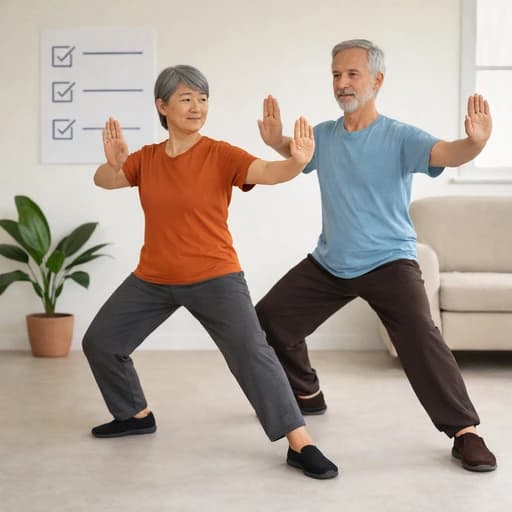
- If pain flares easily, a shorter, slower, modified routine is usually smarter than trying to copy advanced forms.
- For people with mobility limits, tai chi can be adapted while sitting, standing, or walking.
Why tai chi may work well for arthritis
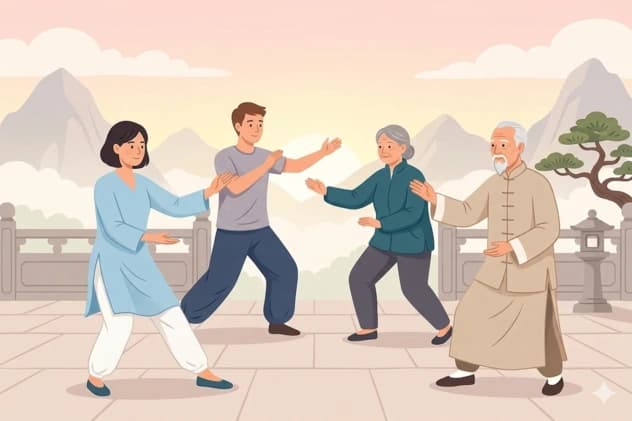
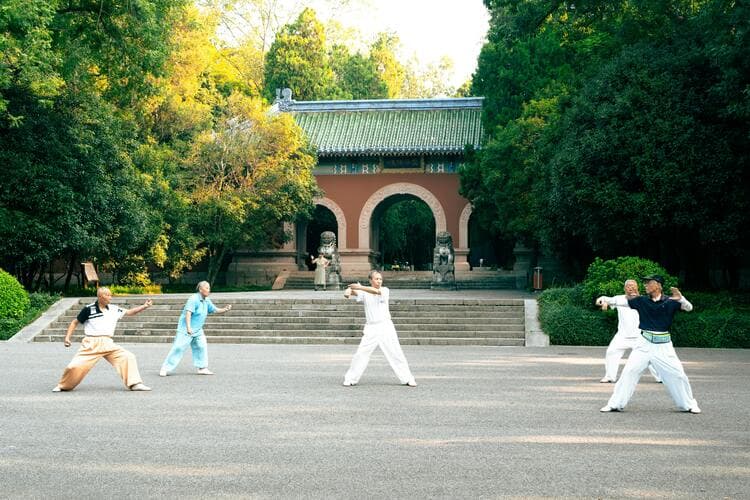
Tai chi is different from many fitness routines because it combines slow movement, posture control, weight shifting, breath awareness, and attention regulation. The Harvard Health overview describes tai chi as circular, unforced movement that can be adapted to many ability levels, which is one reason it is attractive for people who want movement without heavy joint loading.
For arthritis, that combination matters. People are not only dealing with pain; they often also struggle with stiffness, fear of movement, balance decline, and reduced confidence. Tai chi can address several of those at once:
- gentle range-of-motion work,
- repeated weight transfer,
- lower-body control,
- postural awareness,
- calmer pacing that makes consistency easier.
That broader “movement confidence” effect is one reason tai chi tends to be discussed alongside fall prevention strategies for older adults and not just pain relief.
What the research says about osteoarthritis
The clearest evidence is for osteoarthritis, especially the knee. The NCCIH fact sheet notes that a review of osteoarthritis studies found improvements in pain and stiffness, and the 2019 ACR/AF guideline strongly recommends tai chi for knee and hip OA.
More detailed reviews strengthen that picture: A 2021 systematic review and meta-analysis found low-to-moderate strength evidence that tai chi helped with pain, stiffness, physical function, balance, and psychological health in knee osteoarthritis. Another 2021 review focused on walking function and posture control also found positive effects in older adults with knee OA. The AAFP summary of the OA guideline puts tai chi in the same first-line conversation as exercise and self-management.
BMI Calculator (Adults 18+)
Calculate your body mass index and check your weight category.
Formula: BMI = weight(kg) / height(m)²
This calculator is for adults aged 18+ and is for guidance only.
For adults, BMI uses the same formula for female and male users.
Do not use this tool if you are pregnant, under 18, have (or may have) an eating disorder, or have a condition that affects height.
What about rheumatoid arthritis?
This is where many articles become sloppy. Tai chi is often discussed as if “arthritis” were one condition, but that is not accurate.
The Cochrane review on tai chi for rheumatoid arthritis found uncertainty about whether tai chi reduces pain or disease activity in RA. The NCCIH summary makes a similar point: tai chi has not been shown to change disease activity in rheumatoid arthritis, though there may be some improvement in movement quality.
Is tai chi safe for people with arthritis?
- Stay in a pain range you can recover from.
- Reduce depth, speed, and repetition during flares.
- Use a chair or wall for support if balance is uncertain.
- Choose instruction that emphasizes gentle form, not performance.
How to start tai chi for arthritis
- Start with 10 to 15 minutes.
- Practice 2 to 4 times per week.
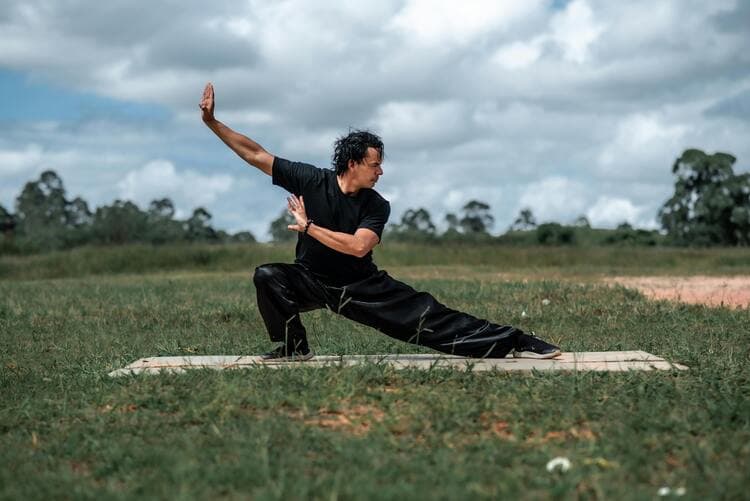
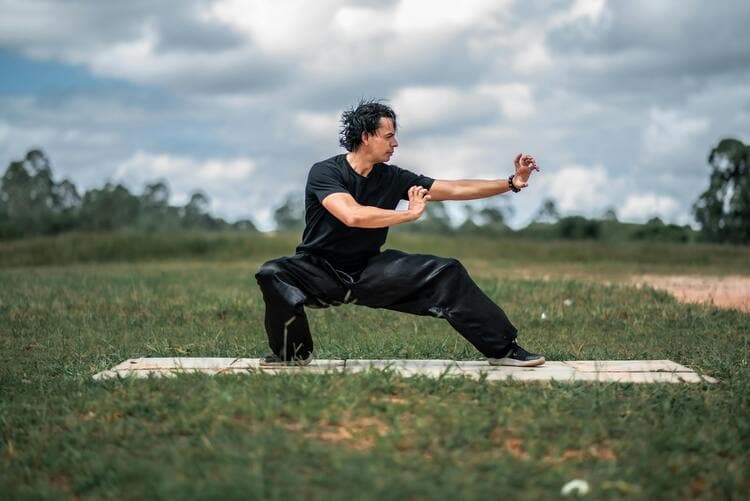
- Focus on upright posture, slow weight shifts, and easy breathing.
- Avoid deep knee bends and aggressive twisting at first.
- Progress only when the current routine feels easy.
FAQ
References
- Tai Chi: What You Need To Know — NCCIH
- 2019 American College of Rheumatology/Arthritis Foundation Guideline for the Management of Osteoarthritis of the Hand, Hip, and Knee
- Tai chi exercise can ameliorate physical and mental health of patients with knee osteoarthritis: systematic review and meta-analysis
- Effects of tai chi exercise on improving walking function and posture control in elderly patients with knee osteoarthritis: a systematic review and meta-analysis
- Tai chi for rheumatoid arthritis — Cochrane review
Updated: 2026-04-15