
Reviewed by Arisa Tanaphon, Certified Tai Chi Instructor, Mindful Movement Specialist
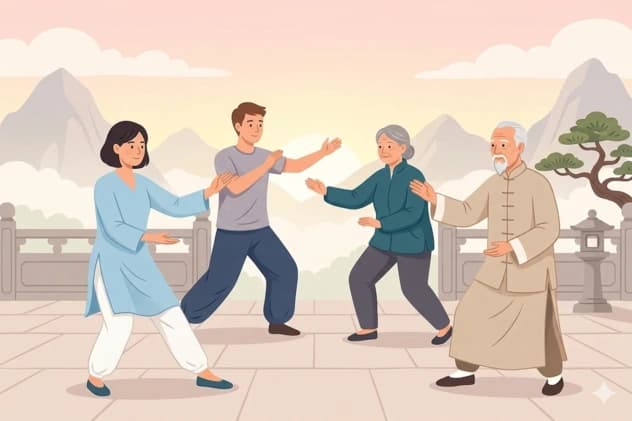
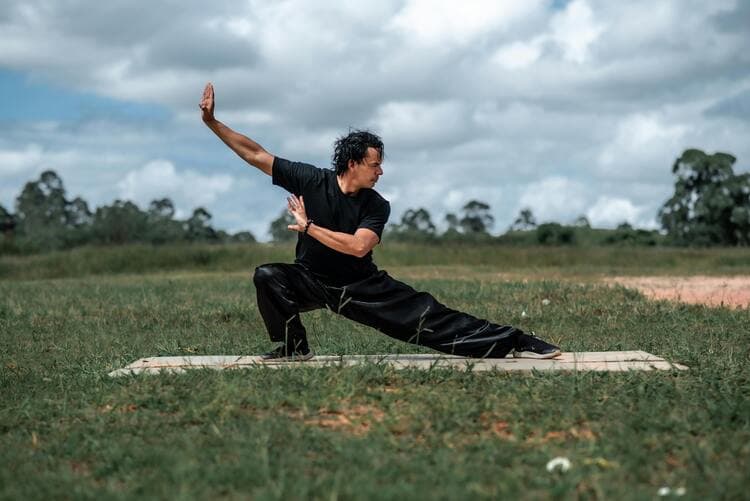
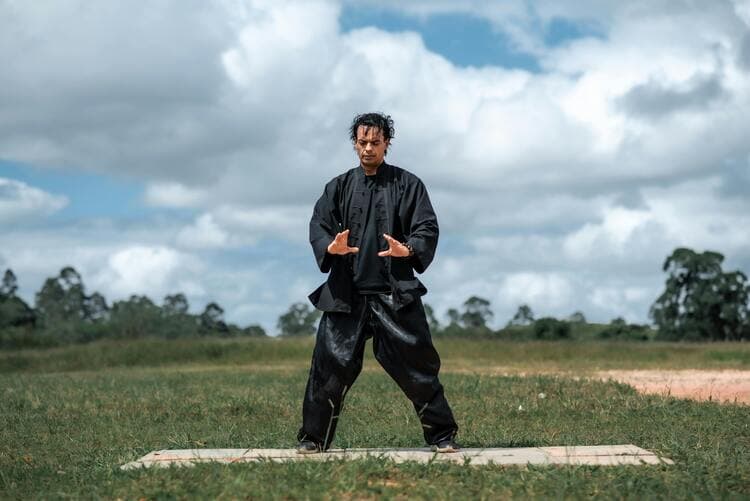
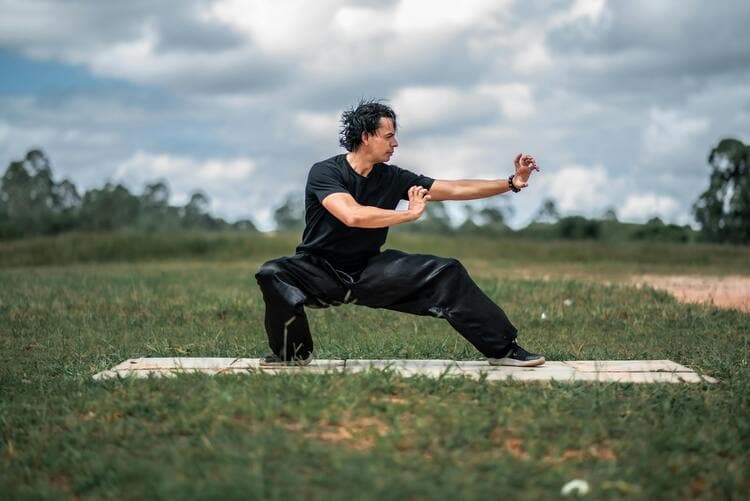
Seated tai chi is not a backup plan for people who “cannot do the real thing.” It is a real practice in its own right. Chair-based tai chi keeps the core principles of tai chi — posture, breathing, coordinated movement, and calm attention — while reducing the demands of standing balance. That makes it useful for beginners with mobility limits, people recovering from illness, and older adults who want a safer entry point.
NCCIH’s tai chi health tips explicitly notes that tai chi movements can be adapted and practiced while walking, standing, or sitting. That one sentence matters more than many people realize.
Key takeaways
- Seated tai chi is a legitimate tai chi adaptation, not a watered-down substitute.
- It can be a strong starting point for seniors, wheelchair users, stroke survivors, or beginners with balance concerns.
- Chair-based practice still trains posture, rhythm, upper-body coordination, and breath-linked movement.
- A stable chair and short sessions are enough to begin.
- Seated tai chi can also be a bridge into standing practice later.
Who seated tai chi is especially useful for
- older adults with poor standing balance
- beginners with a strong fear of falling
- people recovering after illness or stroke
- wheelchair users
- anyone who wants a low-pressure, accessible starting point
BMI Calculator (Adults 18+)
Calculate your body mass index and check your weight category.
Formula: BMI = weight(kg) / height(m)²
This calculator is for adults aged 18+ and is for guidance only.
For adults, BMI uses the same formula for female and male users.
Do not use this tool if you are pregnant, under 18, have (or may have) an eating disorder, or have a condition that affects height.
What the research says about seated tai chi
The seated tai chi evidence base is smaller than the standing tai chi literature, but it is not empty. A 2015 pilot study on sitting Tai Chi and balance control in older adults found improvements in sitting balance and pointing accuracy after training. The American Heart Association summary on seated tai chi after stroke also highlights why chair-based formats deserve more attention in rehab and older-adult settings.
Add to that the general safety meta-analysis and the broader tai chi balance-and-falls overview, and you get a reasonable conclusion: seated tai chi may be a practical, lower-barrier entry point for people who need more support.
How to set up for seated tai chi at home
- does not roll
- does not swivel
- has a stable seat height
- allows your feet to rest securely
A simple 8-minute seated tai chi routine
- 1 minute: quiet seated posture and natural breathing
- 1 minute: slow arm raises and lowers
- 1 minute: opening and closing through the hands and chest
- 1 minute: small left-right torso turns
- 2 minutes: simplified seated cloud hands
- 1 minute: gentle circling arms
- 1 minute: palms down to close the session
What seated tai chi still teaches
- awareness of posture
- relaxed shoulders and neck
- movement from the center instead of only from the hands
- coordinated breathing
- smooth transitions
- calm, repeatable movement habits
When to stay seated and when to progress
Stay with seated tai chi if:
- you feel unsafe standing
- you fatigue quickly
- you are in recovery
- standing causes pain or instability
Progress to supported standing if:
- transfers feel steady
- posture is easier to maintain
- you want to train weight shifting more directly
- your clinician or therapist thinks it is reasonable
- The progression should be gradual, not forced.
FAQ
References
- Lee KYT, Tsang WWN, Ng SSM. The effects of practicing sitting Tai Chi on balance control in older adults. https://pubmed.ncbi.nlm.nih.gov/25060039/
- American Heart Association. Seated form of tai chi might boost stroke recovery. https://www.heart.org/en/news/2022/04/07/seated-form-of-tai-chi-might-boost-stroke-recovery
- UTC. Wheelchair/Adaptive Tai Chi Chuan Program. https://www.utc.edu/arts-and-sciences/social-cultural-and-justice-studies/anthropology/wheelchair-tai-chi-chuan-program
- Adaptive Tai Chi International. https://adaptivetaichi.org/
- Cui H, Wang Q, Pedersen M, et al. The safety of tai chi: a meta-analysis of adverse events in randomized controlled trials. https://pubmed.ncbi.nlm.nih.gov/31229620/
Updated: 2026-04-15