
Reviewed by Arisa Tanaphon, Certified Tai Chi Instructor, Mindful Movement Specialist
Many older adults are not looking for a punishing workout. They want movement that feels sustainable, joint-friendly, and realistic enough to repeat. That is one reason tai chi continues to show up in discussions about healthy aging. NCCIH notes that tai chi may be beneficial for balance and fall prevention in older adults, while the CDC’s fall-prevention page specifically points to tai chi as the kind of activity that can help make legs stronger and improve balance.
For seniors, that combination matters more than hype. The real value of tai chi is not that it looks graceful. It is that it trains control.
Key takeaways
- Older beginners can start with an upright stance, smaller movements, and nearby support. Choose chair practice when standing balance makes it difficult to concentrate on the movement.
- Tai Chi for Seniors & Beginners has 10 plans across standing and chair tracks, each with 30 days and short or extended versions.
- For a seated example, Seated Sunrise Flow contains 16 movements: 8 minutes moving, about 12 minutes with preparation before extra pauses.
- Preview One Leg Balance before lifting the knee and same-side arm. Use the app’s pause and rest controls; stop for pain or dizziness and seek individual guidance when needed.
Why tai chi appeals to seniors
Tai chi works especially well for many older adults because it slows movement down enough to make balance visible. Fast exercise can hide bad habits. Slow exercise exposes them. That is one reason tai chi fits so well with evidence-based fall-prevention thinking, including CDC’s STEADI clinician fact sheet and the CDC Falls Compendium, both of which emphasize balance-oriented strategies.
In practice, tai chi also has everyday advantages:
- no expensive equipment
- can be practiced indoors or outdoors
- works in short sessions
- can be adapted for slower tempos and smaller ranges of motion
BMI Calculator (Adults 18+)
Calculate your body mass index and check your weight category.
Formula: BMI = weight(kg) / height(m)²
This calculator is for adults aged 18+ and is for guidance only.
For adults, BMI uses the same formula for female and male users.
Do not use this tool if you are pregnant, under 18, have (or may have) an eating disorder, or have a condition that affects height.
What the research suggests for seniors
The research is not limited to vague wellness claims. A 2020 overview of 14 systematic reviews found evidence that tai chi can improve balance and reduce falls. A 2020 systematic review on quality of life and depressive symptoms in community-dwelling older adults with chronic disease found small but meaningful benefits in quality of life and mood-related outcomes. There is also growing interest in dual-task and cognition-related training, including a 2023 randomized controlled trial on cognitively enhanced tai ji quan.
That does not mean every senior will have the same result. But it does show why tai chi is taken seriously in healthy-aging conversations.
Is tai chi safe for seniors?
For many seniors, yes — especially when the practice is adjusted to current balance, strength, pain levels, and medical history. A meta-analysis on adverse events concluded that tai chi appears to be safe and that serious adverse events were not generally attributed to the practice itself.
Still, “safe” does not mean “one-size-fits-all.” Seniors should:
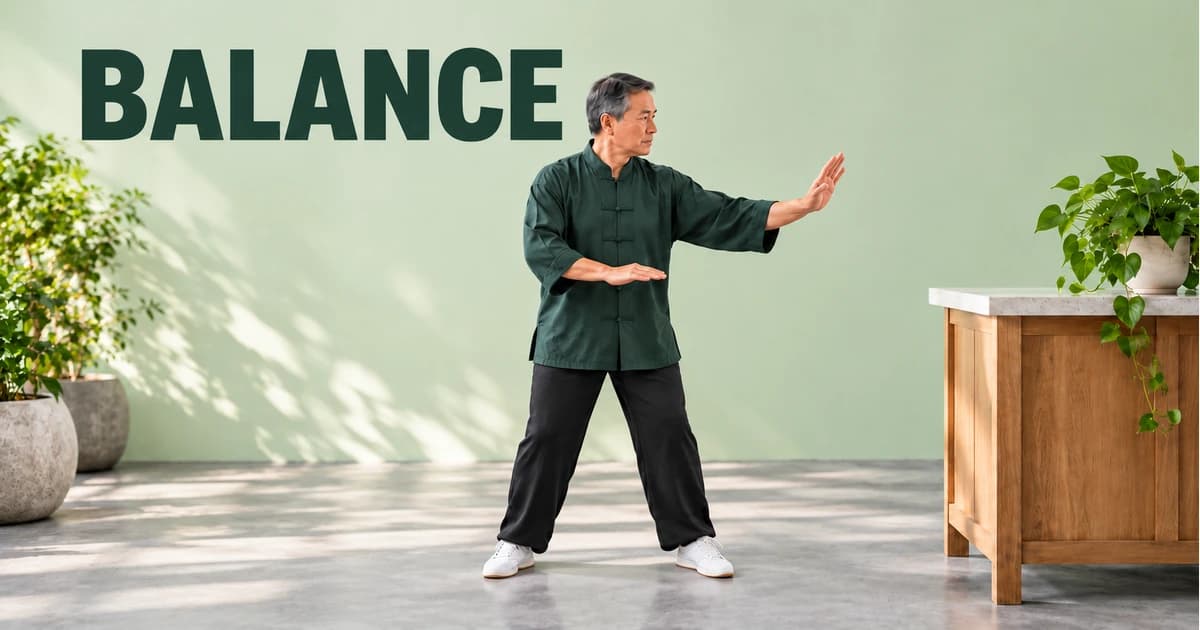
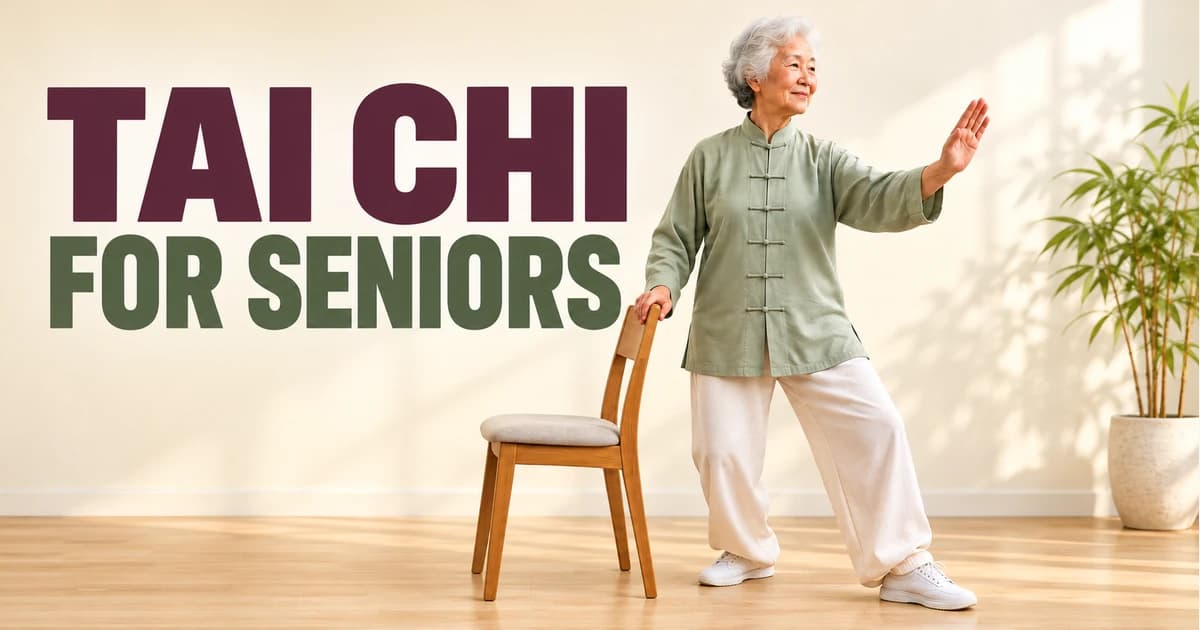
- keep a chair, wall, or countertop nearby if balance feels uncertain
- use a higher stance than they think they need
- shorten arm range when shoulders are tight
- stop if they feel dizzy, breathless, or sharply painful
- increase volume slowly
What a senior-friendly first tai chi session should look like
- 1 minute of quiet posture and breathing
- 2 minutes of side-to-side weight shifts
- 2 minutes of arm raises and lowers
- 2 minutes of gentle turning through the torso
- 2 minutes of one easy pattern like cloud hands
- 1 minute of closing posture or seated breathing
That is enough. Seniors do not need complexity first. They need confidence, rhythm, and the feeling that the practice is manageable.
Standing vs seated tai chi
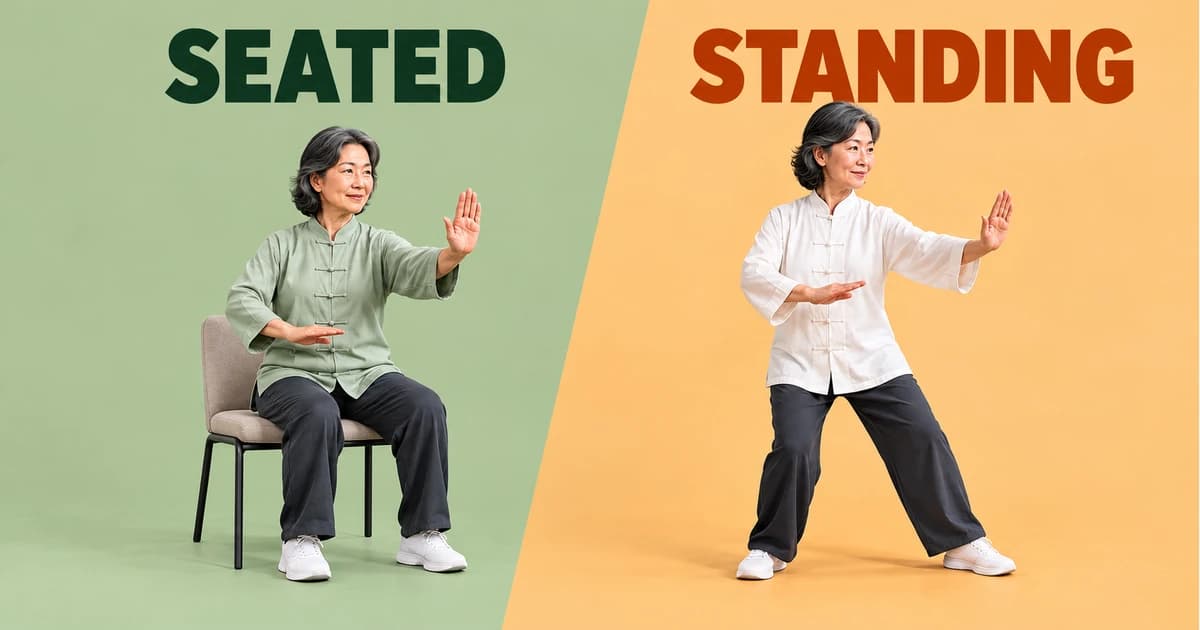
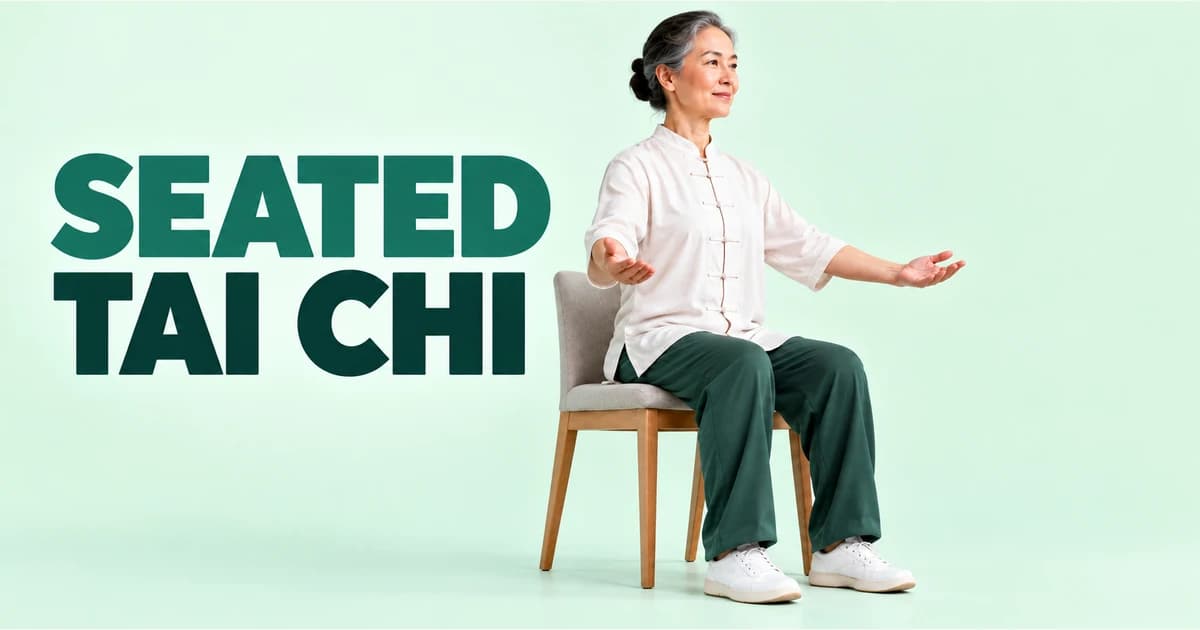
Standing tai chi is often recommended because it trains balance directly. But seated tai chi is not a lesser version. It is often the smarter starting point for people with fear of falling, fatigue, arthritis flare-ups, or major instability. The American Heart Association’s seated tai chi stroke-recovery story and the older-adult sitting Tai Chi study both help show why chair-based practice deserves to be taken seriously.
How seniors should choose a class
Look for a class or instructor that:
- works with older adults regularly
- offers modifications without making people feel awkward
- is comfortable with balance limitations
- explains movement clearly instead of just demonstrating it once
- encourages smooth range of motion rather than pushing depth
If a class feels rushed, too low, too athletic, or too performance-focused, it is probably the wrong fit.
Explore the movements in our app
Compare the tasks rather than choosing by age alone. Centered Ball Hold keeps both feet planted with the arms in a rounded position. Side to Side Sway adds a small weight transfer. Seated March alternates leg lifts from a chair. Each guide shows the movement before you decide whether to try it.
Our app has separate standing and Chair Tai Chi tracks, with progress saved independently for each. Compare the seated beginner plan and standing beginner plan, then choose by the actual movements and your current ability. The chair-versus-standing guide explains the different support and balance demands.
FAQ
Yes. Tai chi is popular with adults over 60 because it is low impact, adaptable, and strongly associated with balance-focused movement.
Three or more short sessions per week is a realistic target. Some seniors do well with 10 minutes daily.
Start with seated tai chi or use support nearby. Safety and consistency matter more than doing the “full version.”
Research suggests it may help reduce falls and improve balance, especially when practiced consistently.
References
- NCCIH. Tai Chi: What You Need To Know. https://www.nccih.nih.gov/health/tai-chi-what-you-need-to-know
- Zhong D, Xiao Q, Xiao X, et al. Tai chi for improving balance and reducing falls: an overview of 14 systematic reviews. https://pubmed.ncbi.nlm.nih.gov/31981834/
- Choo YT, Jiang Y, Hong J, et al. Effectiveness of tai chi on quality of life, depressive symptoms and physical function among community-dwelling older adults with chronic disease. https://pubmed.ncbi.nlm.nih.gov/32891966/
- CDC. Preventing Falls and Hip Fractures. https://www.cdc.gov/falls/prevention/index.html
- CDC. STEADI Clinician Fact Sheet. https://www.cdc.gov/steadi/media/pdfs/STEADI_ClinicianFactSheet-a_1.pdf
Updated: October 16, 2026