
Reviewed by Arisa Tanaphon, Certified Tai Chi Instructor, Mindful Movement Specialist
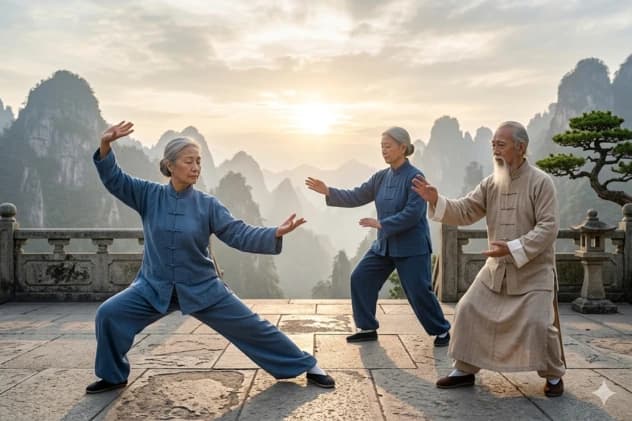
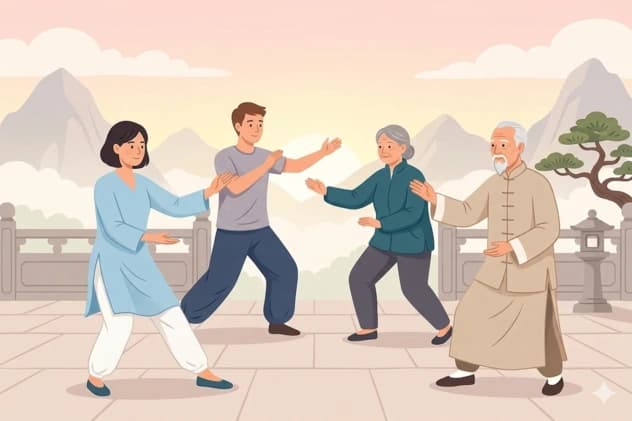
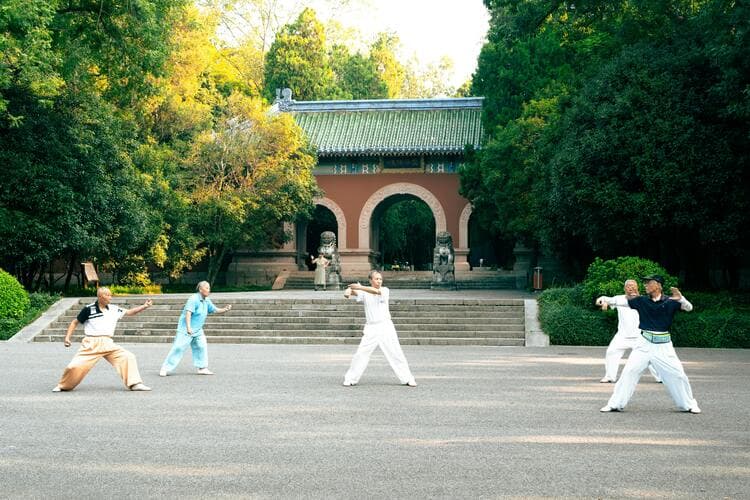
Tai chi is often described as moving meditation, but that phrase can sound vague unless it is tied to actual mechanisms and evidence. At a practical level, tai chi blends slow movement, controlled breathing, body awareness, and sustained attention. That combination makes it plausible as a stress-management practice, and several reviews suggest there may be real psychological benefits.
The cautious version matters here. The NCCIH anxiety page says that tai chi and qigong may reduce anxiety, but also notes that larger, higher-quality randomized trials are still needed.
Key takeaways
- Tai chi is not magic, but it may help reduce perceived stress, anxiety symptoms, and mental tension in some groups.
- The 2024 stress meta-analysis suggests potential benefits for stress and related outcomes.
- The NCCIH anxiety overview says evidence is promising but still not definitive.
- Tai chi may be especially useful for people who dislike high-intensity exercise or struggle to stay with seated meditation.
- It works best as a repeatable routine, not as a one-time fix.
Why tai chi may help with stress
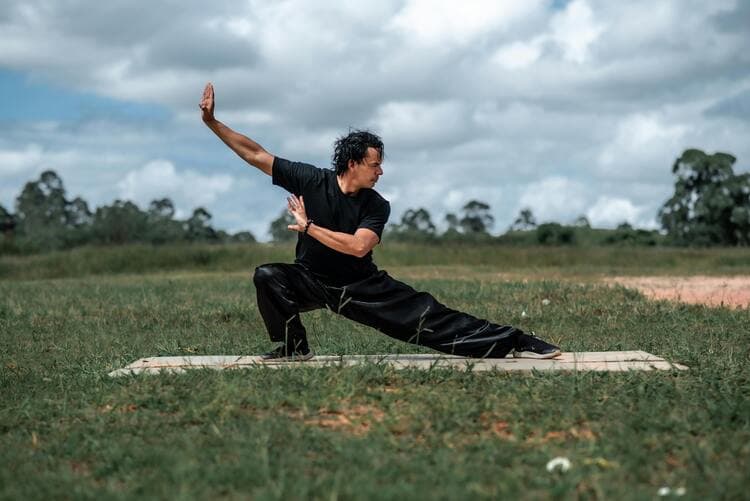
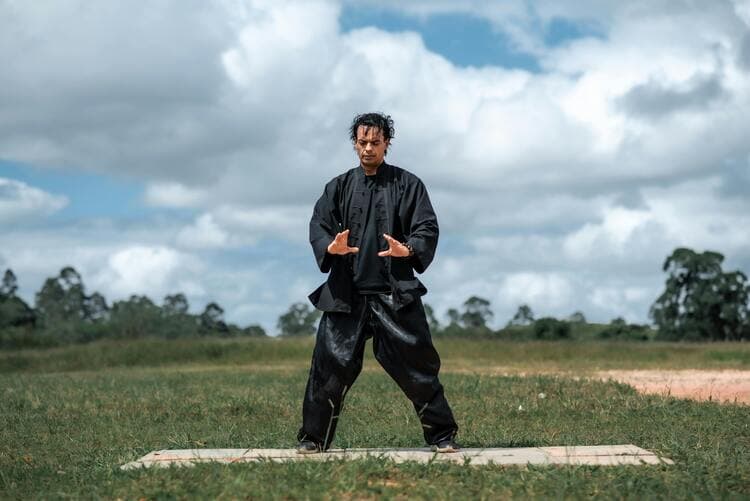
- notice weight moving from one leg to the other,
- relax the shoulders,
- slow the breath,
- keep attention on one sequence.
What the research says
The most current signal comes from the 2024 systematic review and meta-analysis on stress reduction through taiji, which reported that taiji showed potential for reducing perceived stress, with parallel improvements in some related outcomes.
Earlier evidence points in the same direction, including a 2014 systematic review and an older review on psychosocial well-being.
Tai chi is not the same as treatment for an anxiety disorder
Tai chi may help with everyday stress, mild anxiety, emotional regulation, tension, and recovery from mental overload. But it is not a replacement for therapy, medication, crisis support, or formal treatment when someone has severe anxiety, panic, or major functional impairment.
Who may benefit most
- feel too restless for seated meditation,
- want something gentler than intense cardio,
- notice stress mostly as body tension,
- want a routine they can do at home,
- prefer structured movement over abstract mindfulness exercises.
How to start tai chi for stress relief
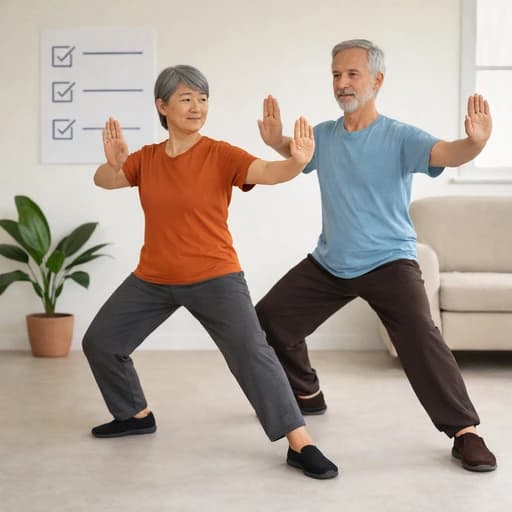
- Practice for 10 to 20 minutes.
- Keep the movements slow and repeatable.
- Sync movement with a calm breathing rhythm.
- Avoid judging whether you are “doing it perfectly.”
- Repeat the same sequence for a couple of weeks before changing programs.
FAQ
References
- Stress reduction through taiji: a systematic review and meta-analysis
- The effects of tai chi on depression, anxiety, and psychological well-being: a systematic review and meta-analysis
- The effect of Tai Chi on psychosocial well-being
- Anxiety and Complementary Health Approaches — NCCIH
- 5 Tips: What You Should Know About Tai Chi for Health — NCCIH
Updated: 2026-04-15