
Reviewed by Arisa Tanaphon, Certified Tai Chi Instructor, Mindful Movement Specialist
Build a daily Tai Chi routine around a brief opening, one familiar movement, a small amount of review, and a quiet closing. A few focused minutes can be easier to fit into your day than a sequence you have to rush.
The example below uses traditional names such as Commencing Form and Wave Hands Like Clouds. If you are learning them for the first time, use a teacher’s demonstration alongside our guide to seven basic movements.
Key takeaways
- A daily Tai Chi routine needs a repeatable sequence and time to check unfamiliar transitions. Keep a shorter option for days when you have less time.
- In Tai Chi for Seniors & Beginners, Gentle Morning Warm-Up has 12 movements: 6 minutes moving, about 9 minutes with preparation before extra pauses.
- Daily practice was the preference of 65.4% of people answering the app’s getting-started questions, September 1–October 14, 2026. These were intentions, not recorded attendance. See the method.
- Use Progress history to review your own sessions. Traditional movements such as Commencing Form and Wave Hands Like Clouds provide another route for learning with a teacher.
A simple order for one practice
- Open with Commencing Form. Settle the feet, soften the knees, and follow a small, controlled rise and lowering of the arms. Let this establish an unhurried pace.
- Review Wave Hands Like Clouds. Rehearse the weight transfer first, then coordinate the rounded hand paths. Keep the feet planted until you are ready for the side steps taught in your chosen version.
- Choose one posture to study. Parting the Wild Horse’s Mane or Brush Knee and Push gives you a specific stepping pattern to learn. Practice the foot placement separately if adding the hands makes you rush.
- Make Golden Rooster optional. Try a low supported knee lift only when the transfer feels steady. Keep the toes down for a smaller rehearsal and return to two feet between attempts.
- Finish with Closing Form. Lower the hands slowly, return to a comfortable stance, and pause before moving on with your day.
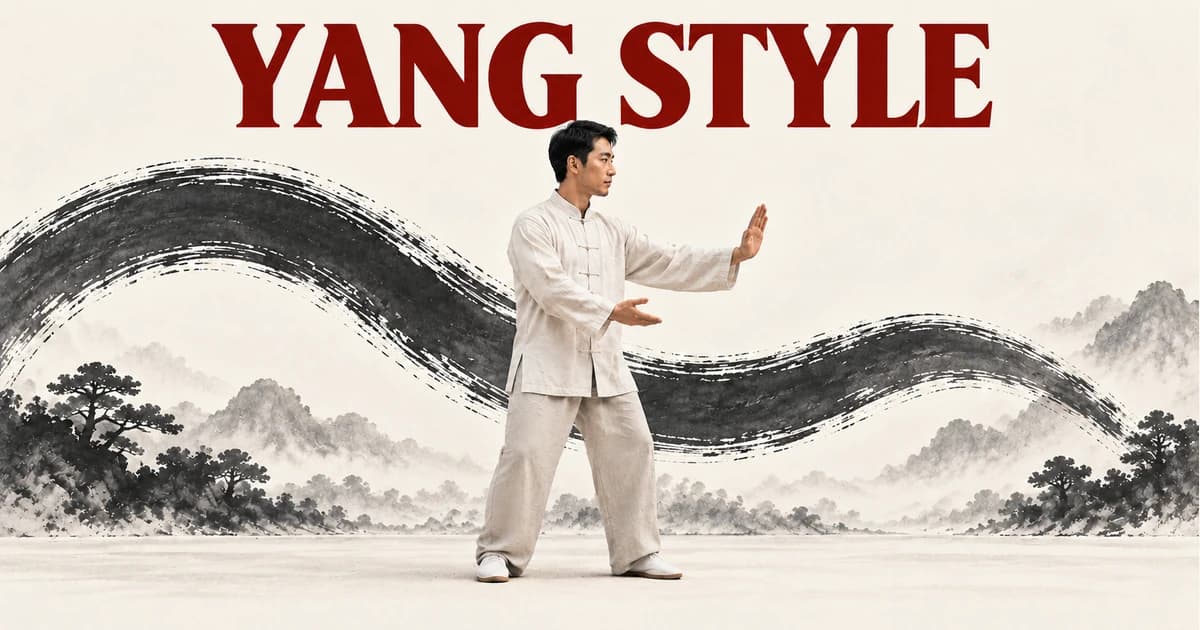
These are practice choices, rather than a complete traditional form. The Yang-style guide explains how named postures connect within a longer sequence.
A weekly routine you can adapt
| Day | Practice focus | Time to set aside |
|---|---|---|
| Monday | Commencing Form, a small Cloud Hands pattern, Closing Form | 5–10 minutes |
| Tuesday | Review the opening; learn the foot placement for Parting the Wild Horse’s Mane | 5–10 minutes |
| Wednesday | Repeat familiar movements, or take a rest day | As comfortable |
| Thursday | Review Cloud Hands; study one Brush Knee and Push transition | 5–10 minutes |
| Friday | Practice controlled weight transfer; optional supported Golden Rooster rehearsal | 5–10 minutes |
| Saturday | Connect only the patterns you can follow without rushing | 10–15 minutes if comfortable |
| Sunday | A short review with Closing Form, or rest | As comfortable |
An example learning schedule, not a prescribed exercise dose. Use shorter practices or rest when needed.
Choose a time and space you can return to
Compare the morning routine and evening routine by their movement lists. Choose the window that leaves time to watch, pause, and reset your feet. You do not need to practice at the same hour as someone else.
Clear the floor and keep any fixed support within easy reach. For a shallower stance, supported practice, or a chair option, see Tai Chi for seniors. If daily appointments do not fit your week, use the alternatives in how often to practice Tai Chi.
A daily plan starts with a manageable week
Daily practice was the choice of 65.4% of people answering our getting-started questions. Another 27.2% preferred three times a week and 7.4% preferred once a week. These answers describe intentions, rather than a recommended training dose.
Keep a short, familiar option alongside your longer routine. Use your own Progress history to see which days and session lengths fit your life.
From Tai Chi for Seniors & Beginners, September 1–October 14, 2026. About these numbers.
Estimate calories for your own session length
Tai Chi Calories Burned Calculator
Estimate calories burned per session using MET-based calculation.
Formula: Calories = MET × Weight(kg) × Duration(hours)
Current MET: 3.5
Estimates only. Actual energy burn varies by technique, body composition, and movement quality.
Enter the time you actually spend practicing. The result is an estimate based on body weight, duration, and activity intensity. It cannot measure your personal energy use. Read the Tai Chi calories guide for the assumptions behind the calculator.
Follow a guided sequence in the app
Tai Chi for Seniors & Beginners offers standing and chair plans with short and extended versions. The standing beginner plan previews the first seven days, with links to every movement. Its exercises have their own names and do not form a lesson in the complete traditional sequence above.
For example, Floating Cloud Hands rehearses rounded arms and stationary weight transfer. Grounded Closing Stand gives you a controlled ending. In the app, watch the trainer, pause when needed, adjust rest, and use Progress to look back at completed practice.
Questions about a daily routine
No. Daily practice is one scheduling choice. Start with a frequency you can fit comfortably into your week and leave room for rest or individual advice.
No. Begin with one familiar pattern and a controlled opening and closing. Add a new posture when you can follow its demonstration without hurrying.
Use a separate chair sequence instead of trying to reproduce standing steps while seated. The seated beginner plan has demonstrations and its own exercise order.
Updated: October 16, 2026