
Reviewed by Arisa Tanaphon, Certified Tai Chi Instructor, Mindful Movement Specialist
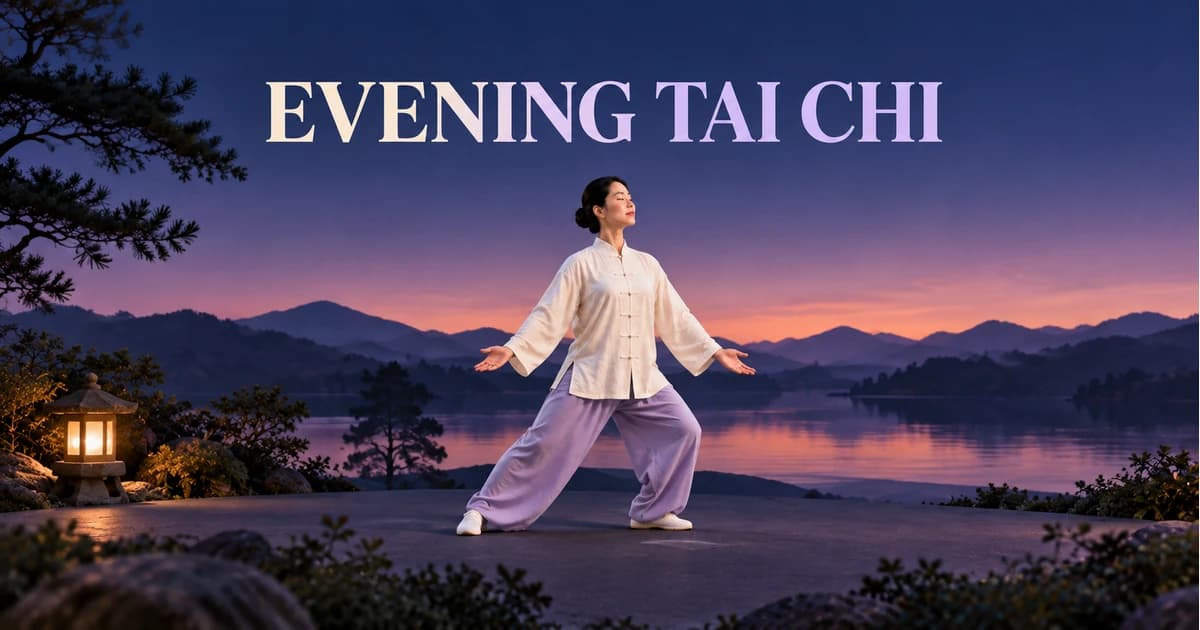
Evening Wind Down is an 11-movement standing session in Tai Chi for Seniors & Beginners. It combines head and shoulder movements, weight shifts, turns, bends, and a closing arm pattern. The name describes a practice option for the evening, without promising a sleep result.
Its timed movement blocks add up to 5 min 30 sec. With the default preparation time, the session is 8 min 15 sec before extra pauses or changed rests. Leave enough time to review unfamiliar movements instead of rushing to fit a fixed bedtime window.
Key takeaways
- Choose an evening Tai Chi sequence you can follow comfortably. Familiar movements and unhurried transitions matter more than trying to force a sleepy feeling.
- In Tai Chi for Seniors & Beginners, Evening Wind Down has 11 movements: 5 minutes 30 seconds moving, about 8 minutes 15 seconds with preparation before extra pauses.
- Evening accounted for 26.6% of 18,902 completed app sessions with known local ending times, September 1–October 14, 2026; evening means 17:00–23:59. Sleep benefits were not measured. Method.
- Preview Grounded Twist Flow’s wide bent-knee stance and Forward Bend Stretch’s hip hinge. Pause the app or choose a chair session if these movements are unsuitable.
Check the bends as well as the closing movements
A calm session name does not mean the entire sequence is still or seated. Grounded Twist Flow uses a wide bent-knee stance. Forward Bend Stretch includes a hip hinge with the hands behind the head. Use a comfortable range and inspect these movements before following the full session.
For Forward Bend Stretch, hinge from the hips with the hands behind the head and the elbows comfortably open. Keep the movement centered, use a shallow fold, and return to standing slowly.
The complete Evening Wind Down sequence
| Step | Movement guide | Detail to notice |
|---|---|---|
| 1 | Gentle Head Rotations | Return the head through a comfortable neutral center. |
| 2 | Owl Neck Turn | Coordinate a small head turn with the arm opening. |
| 3 | Shoulder Roll | Keep the shoulder roll controlled on the lowering. |
| 4 | Lower Back Wave | Shift weight side to side with light hand support on the thighs. |
| 5 | Grounded Twist Flow | Preview the wide bent-knee stance and supported torso turn. |
| 6 | Forward Bend Stretch | Use a small hip hinge; reaching a particular angle is optional. |
| 7 | Reach for Stars | Return upright between the alternating overhead side reaches. |
| 8 | Chest Opening | Open the arms without pushing the ribs forward. |
| 9 | Centered Ball Hold | Hold the rounded arms while breathing comfortably. |
| 10 | Energy Return Movement | Follow the hands downward after the outward arm sweep. |
| 11 | Grounded Closing Stand | Lower the arms and complete the quiet pause. |
Preview the rounded hold and closing pattern
Centered Ball Hold
- Stand with feet apart and knees softly bent. Raise arms as if holding a large ball.
- Relax shoulders and keep chest open.
- Breathe slowly and hold the position calmly.
Grounded Closing Stand
- Stand with feet shoulder-width apart. Inhale and extend the arms in front of the body.
- Exhale, and slowly lower them back down.
- Let the arms rest by your sides and pause calmly.
Keep the breathing cues comfortable
In Centered Ball Hold, let the arms stay rounded without tightening the hands or holding the breath. In Grounded Closing Stand, use a small forward extension and a controlled lowering. You can shorten either arm position when the shoulders begin to tense.
If your breathing does not match a spoken cue, continue naturally and reduce the movement range. Read Tai Chi breathing for beginners for a simple way to learn that coordination before trying a full sequence.
Choose a chair sequence when that format fits better
You can compare Chair Relief, which has its own seated turns and reaching patterns. Preview its forward reaches and low hand positions as carefully as you would a standing bend. Seated practice still includes movements that need a comfortable range.
For a smaller selection of chair arm patterns to inspect first, see chair Tai Chi upper-body exercises. A single movement can help you understand the task before choosing a complete session.
An evening routine has its place
Evening sessions made up 26.6% of the 18,902 completed app sessions with a known local time. These sessions ended between 5 p.m. and midnight.
If evenings give you a quieter window, choose a familiar sequence and leave time to pause between movements. Our records describe timing, without measuring sleep or comparing the benefits of morning and evening practice.
From Tai Chi for Seniors & Beginners, September 1–October 14, 2026. About these numbers.
Choose an evening practice for your needs
A calmer pace gives you room to notice shoulder tension and reset between movements. Read Tai Chi for stress and anxiety for the research context. If you are choosing practice with hypertension in mind, use the blood pressure guide alongside your usual care; an evening session is not a blood pressure treatment.
Let the controls fit the way you want to practice
In the app, use pauses to check a transition, choose a rest interval, and set background music preferences separately from audio instructions. Progress records the practice activity you complete. The Evening Wind Down workout page preserves the original order, while the standing beginner plan offers a separate day-by-day sequence if you prefer that structure.
Updated: October 16, 2026